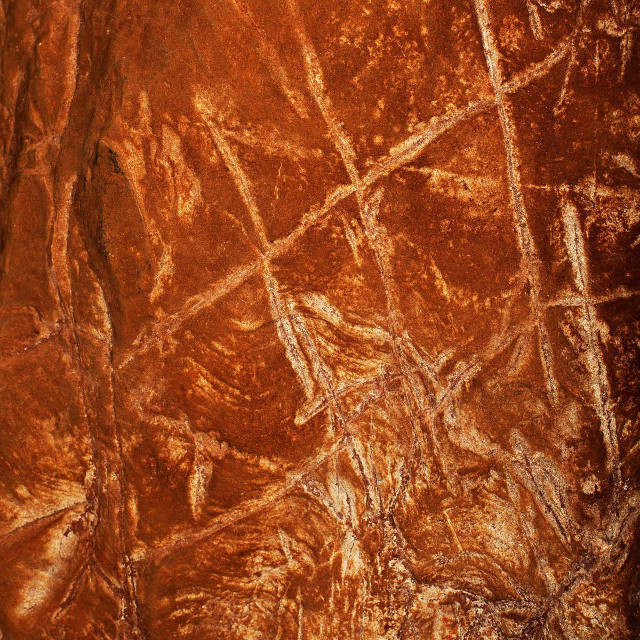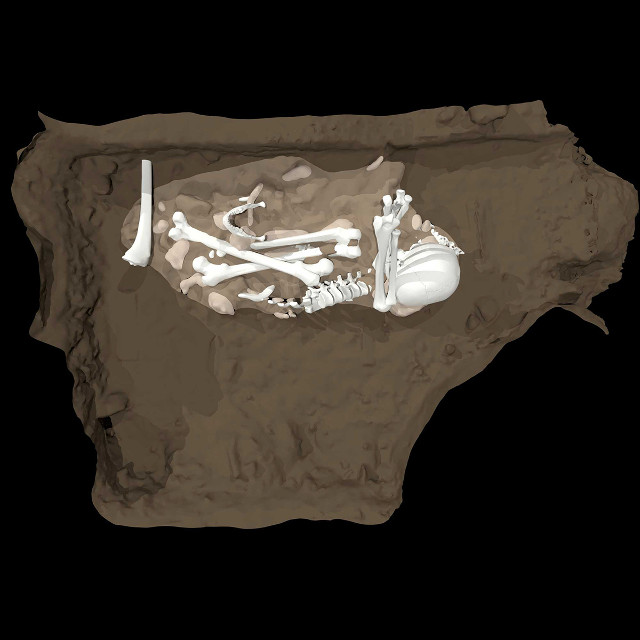
Three articles – available here, here, and here – under peer review ahead of a publication in the journal “eLife” report different aspects of a study of what were defined as intentional burials of individuals belonging to the species Homo naledi. Various researchers including Dr. Lee Berger, who led the team that discovered these hominins, examined the cave called Rising Star, about 50 km northwest of Johannesburg, South Africa, in which their fossils were discovered and what were interpreted as engravings of symbols accompanying those burials. This would mean that Homo naledi buried their dead between 241,000 and 335,000 years ago, 100,000 years before Homo sapiens.
Even before the official publication of the papers, other researchers expressed their skepticism supporting the theory that the Homo naledi discovered in that cave were dumped there and claiming that it’s impossible to date the carvings, which could have been made much later.
The announcement made in 2015 of the discovery of a new species of hominins that were named Homo naledi aroused much interest, also due to the mix of primitive and modern characteristics of the individuals found. Since the beginning, the discovery has been accompanied by controversy over the classification of fossils, so it’s not surprising that there’s skepticism about the researchers’ new conclusions as well.
Dr. Lee Berger had offered the idea that those individuals were buried intentionally, an important hypothesis considering that the oldest burial discovered so far dates back to 78,000 years ago. Analysis of the sediments present around the bones indicates that those fossils have ages ranging from 241,000 to 335,000 years.
Studying the cave is difficult due to the very small size of the passages between the various chambers, but Lee Berger and his collaborators continued to explore them and found more fossil bones. The findings also included objects and carvings that were attributed to Homo naledi because no traces of other hominins were found within the cave.
Homo naledi had a small brain compared to that of Homo sapiens, similar in size to that of a chimpanzee or an Australopithecus. However, brain structure is more important than size, so it’s possible that Homo naledi had similar self-awareness to modern humans and that this included special treatment of their deceased.
If the conclusions of this study are correct, they would provide important insights into Homo naledi’s mental abilities but they have already been contested. According to other researchers, the discovered individuals may have been dumped into the cave, where they were covered in sediment brought by natural processes. Regarding the engravings, some argue that they could have been made many millennia later by hominins belonging to another species, as it’s not possible to date them.
In one of the articles submitted to the journal “eLife”, the authors stated that the burial and the related meaning by a small-brained hominin alters our understanding of human evolution. Precisely for this reason, more evidence is needed that those in the Rising Star cave are indeed intentional burials and that the carvings are symbols engraved by Homo naledi.