Astronomy / Astrophysics

PulChron setup (Photo courtesy ESA)

ESA began experimenting with a new type of clock called PulChron based on pulsars. Activated at the end of November 2018, this system is based on the impulses generated by these neutron stars that spin very rapidly in extremely precise times. 18 pulsars monitored with various radio telescopes were used for the measurements, which provide extremely accurate time references for various purposes such as verifying the performance of the Galileo European navigation system’s satellites.

Riccardo Giacconi receiving the 2003 National Medal of Science

On Sunday, December 9 Riccardo Giacconi passed away. He was the father of X-ray astronomy and Nobel Prize in physics in 2002 for his contributions in that field. In 1962 Riccardo Giacconi discovered the first extraterrestrial X-ray source, named Scorpius X-1. In 1970 he oversaw the launch of NASA’s Uhuru satellite, the first specialized in X-ray astronomy, followed in the following decades by increasingly sophisticated stellites such as the Einstein Observatory (HEAO-2) in 1978, designed while Giacconi was director of the Harvard Smithsonian Center for Astrophysics, to NASA’s Chandra X-ray Observatory in 1999.

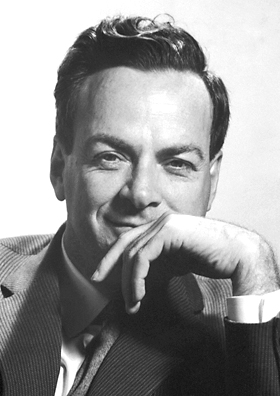
Richard Feynman

Richard Phillips Feynman was born on May 11, 1918 in New York, USA. Richard Feynman developed the mathematical tools that allowed him to arrive at quantum electrodynamics, the theory for which in 1965 he was awarded the Nobel Prize for physics. Over the years he received a number of national and international awards up to the National Medal of Science in 1979.

Richard Feynman died on February 15, 1988, leaving a considerable legacy in the scientific field for his contributions and also as a popularizer. In the following years he was remembered in various ways with tributes, biographies, new editions of his autobiographical works and much more.

Stephen Hawking at the National Library of France

Stephen Hawking, one of the most well-known figures in physics and astrophysics passed away in the night at his home in Cambridge, England.

Stephen Hawking’s studies on black holes for which he became famous remain crucial in the field of physics and astrophysics. I wonder if in the end he was still lucid enough to realize the bitter irony of dying on Albert Einstein’s birth anniversary. With his sense of humor perhaps his last emotion was amusement. He was an atheist so he didn’t have the comfort of a religion but that of the appreciation of life.

Images of galaxies taken using gravitational lenses (Image Yashar Hezaveh/Laurence Perreault Levasseur/Phil Marshall/Stanford/SLAC National Accelerator Laboratory; NASA/ESA)

An article published in the journal “Nature” describes the application of neural networks to gravitational lensing. A team of researchers reduced from a few weeks to a few seconds the time needed to analyze complex space distortions in images captured thanks to gravitational lenses. This could greatly facilitate this type of task with great benefits for astronomical research.