Bacteria

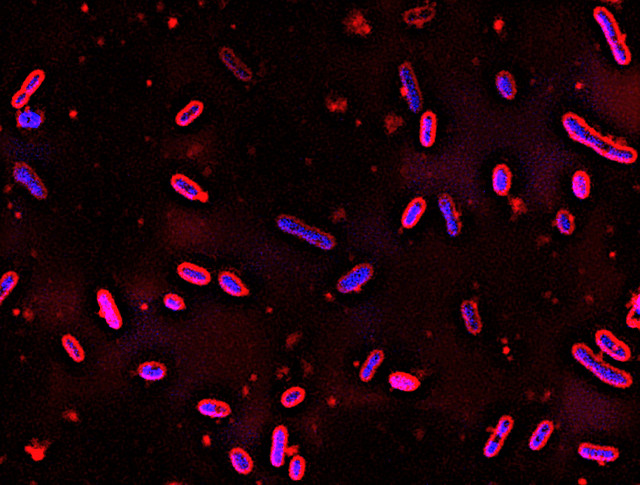
Novosphingobium aromaticivorans (Image GLBRC)

An article published in the journal “Green Chemistry” describes the possibility of using bacteria of the species Novosphingobium aromaticivorans to produce a plastic material starting from wood processing waste following some genetic modifications. A team of researchers worked on this bacterium, which in nature can already digest many parts of lignin, improving its ability to produce a substance known as PDC on which bioplastic materials are already based upon but with production difficulties that could be overcome using these bacteria.

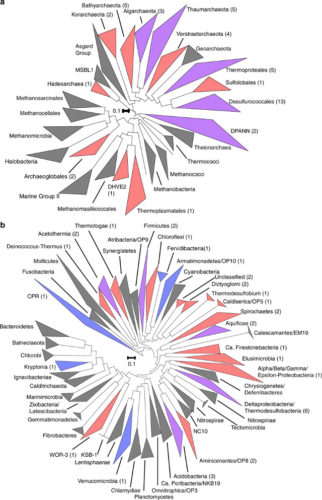
A remarkable diversity of microorganisms discovered in one of Yellowstone springs

An article published in the journal “Nature Communications” reports the discovery of a diversity never encountered before in the microorganisms found in one of the hot springs of Yellowstone National Park, in the USA. A team of researchers from Montana State University (MSU) used genomic tools to examine the microbial community in the source called Smoke Jumper 3 (SJ3), discovering both bacteria and Archaea that represent about half of the known branches of these domains of life. It’s an extraordinary discovery because understanding which geological and biological processes can lead to such diversity can provide new information on the reasons why certain life forms can emerge and thrive.

Hematite tubes (Image courtesy Matthew Dodd, University College London)

An article published in the journal “Nature” describes what might be the oldest life forms discovered so far. An international team led by Matthew Dodd studied tiny filaments and tubes they think were formed by bacteria living on iron and were found in the layers of quartz in the Nuvvuagittuq Belt in Quebec, Canada. However, this research has already raised a controversy.

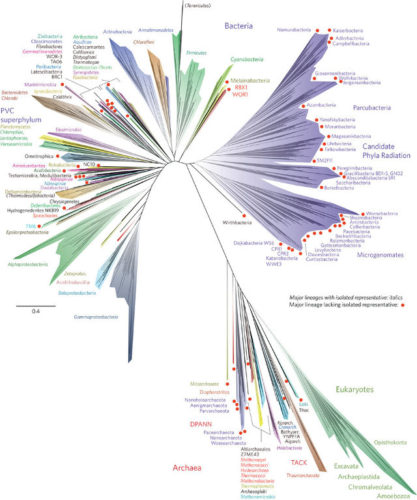
The tree of life

An article published in the journal “Nature Microbiology” describes a genetic research that offers a broader vision of the tree of life. A team of researchers of the University of California, Berkeley, led by Laura Hug, who now works at the biology faculty of the University of Waterloo, Ontario, Canada, built a new tree of life showing a diversity formed for two thirds by bacteria and archaea.