
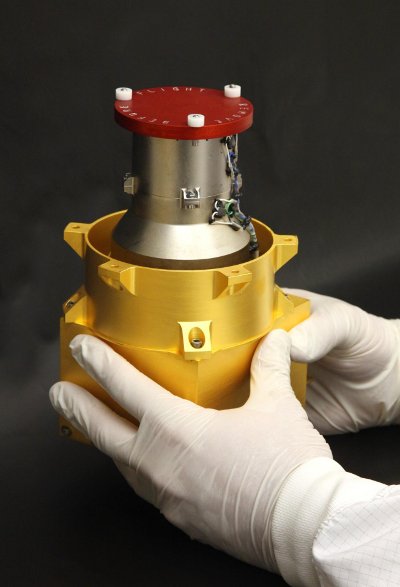
The Mars Rover Curiosity arrived on Mars last year but the Mars Science Laboratory mission was already at work during its interplanetary journey. Curiosity has traveled within a spaceship just as human astronauts would therefore it was fitted with the Radiation Assessment Detector (RAD) instrument in order to measure the amount of radiations absorbed in the course of the journey. The analysis of the data received indicate that they’re exceeding the limits for astronauts during their whole career.
Two types of radiation would be risky for an astronaut during a long trip as long as one to Mars or anyway in deep space. One type consists of galactic cosmic rays (GCR) and other high energy events from outside the solar system. The other type is solar radiation, particularly flares and coronal mass ejections (CME) that cause the emission of solar energetic particles (SEP).
The astronauts are always someway at risk and therefore are subject to medical check-ups but as long as they remain within the Van Allen belts they have some protection because theose belts form an electromagnetic shield that stops most of the radiation. The data from the RAD instrument show that the situation is far worse in deep space with a much higher risk of developing forms of cancer but also cardiovascular diseases, cataracts and damage to the central nervous system.
Concerning the solar particles, effective defenses already exist and it would be easy to build within a spacecraft even more protected environments in which astronauts could take refuge in case of particularly violent solar events. Instead, cosmic rays represent a more serious problem because of their high energies that allow them to penetrate even the most resistant shields currently available.
In the past years plans to build new types of anti-radiation shields were already proposed but they were based on theoretical assessments of the levels of radiation present in interplanetary space. Now scientists have real data available to work on to evaluate new types of protections.
Space missions have always led to progress in the development of new materials, certainly the study of radiation protection will bring more of them. It remains to be seen how long it will take to find adequate solutions, also because they’ll need to be tested in interplanetary space, therefore with the need to send more probes with a RAD instrument or a similar one for a practical assessment.
Meanwhile, the Mars Rover Curiosity keeps on measuring radiation on the surface of Mars as well because it’s important to evaluate the protection of the habitats that will accommodate the astronauts and colonists who in the future will hopefully arrive on the red planet.
[ad name=”AmazonScience”]
