May 2014

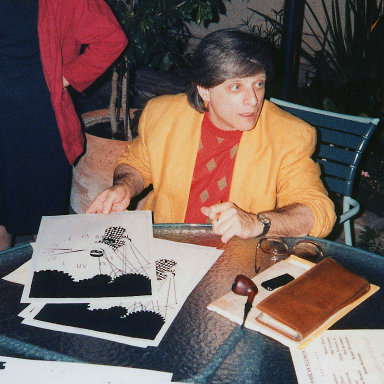
Harlan Ellison in 1986

Harlan Jay Ellison was born on May 27, 1934 in Cleveland, Ohio, USA. He’s famous as a writer and screenwriter. He wrote many science fiction stories, often winners of Hugo, Nebula and Locus awards, but also detective stories, thrilles and other genres. In 1967, Harlan Ellison was the editor of the famous anthology “Dangerous Visions”, which represents.

Working for television, Harlan Ellison wrote screenplays for several TV shows includining the original “Star Trek” series and “The Alfred Hitchcock Hour”. He was also the creative consultant for the version of the ’80s of “The Twilight Zone” and later for “Babylon 5”.

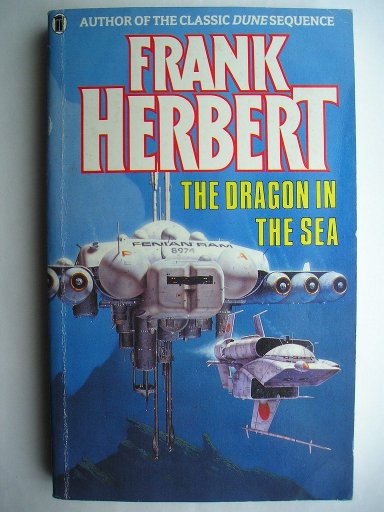
The Dragon in the Sea by Frank Herbert

The novel “The Dragon in the Sea” by Frank Herbert was published for the first time between 1955 and 1956 serialized in the magazine “Astounding” with the title “Under Pressure” and as a book in 1956.

After more than a decade, the war between the Western bloc and the Eastern bloc has led to a scarcity of resources. The West started using specialized nuclear submarines to steal the East’s oil infiltrating into enemy territory to go pick it up directly into the undersea oil fields.

The Eastern bloc successfully started infiltrating enemy agents in submarine crews, made up of four people. The result, together with the danger of their missions, is that twenty submarines have disappeared. John Ramsay is a young psychologist trained as an electronic operator who is assiened as part of a new mission to find the enemy agent and figure out how to prevent others go mad.

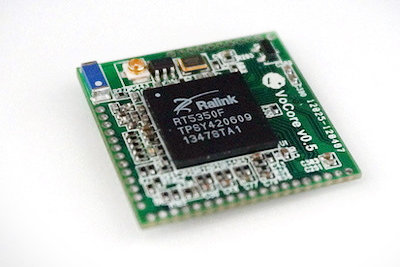
A VoCore computer (Photo courtesy VoCore team. All rights reserved)

In recent years we’ve been seeing an extraordinary proliferation of very small computers that have low costs but really interesting potential. A project that is raising funds via the crowdfunding method on the IndieGoGo website is VoCore, which has the purpose of producing large quantities of a coin-sized computer, less than one square inch (25 mm x 25 mm).

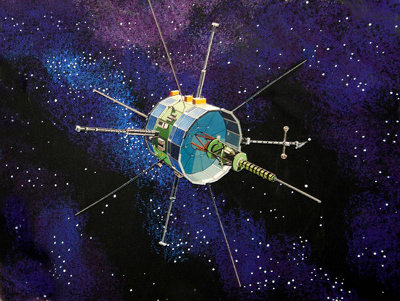
Artistic concept of the ISEE-3 / ICE space probe (Image NASA)

NASA has signed an agreement with an external group to allow an attempt to contact and to take control of the old ISEE-3 (International Sun/Earth Explorer 3) space probe, also known as ICE (International Cometary Explorer). It was designed to study the interactions between the Earth’s magnetic field and the solar wind along with the ISEE-1 and ISEE-2 probes but in the ’80s it was also used for the study of comets, hence the name ICE.

A study presented at the annual meeting of the American Society for Microbiology showed that the Mars Rover Curiosity was anything but sterile when it left for the red planet. Despite the cleaning procedures the rover has been submitted to, swabs passed on its surface were analyzed and revealed the presence of 65 species of bacteria. Some of them may have survived the interplanetary journey.