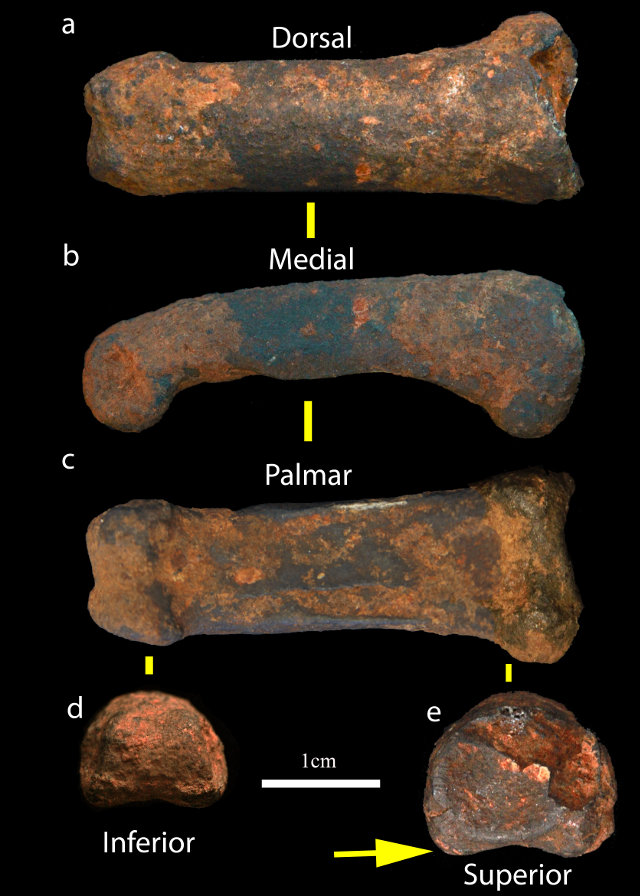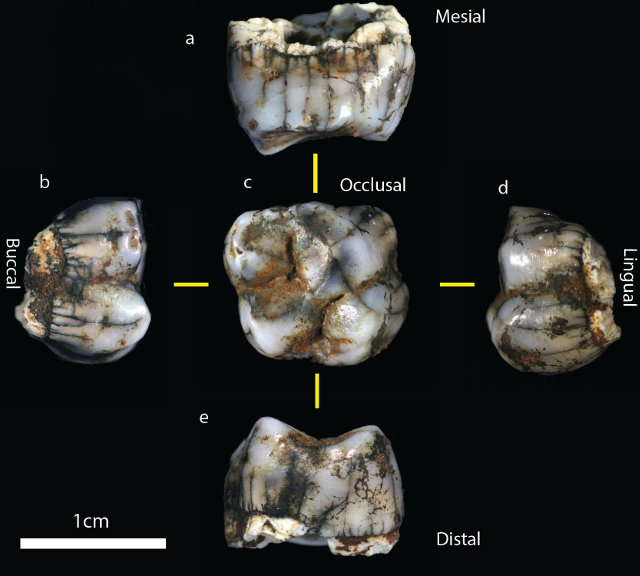
An article published in “Journal of Human Evolution” describes the exam of some fossils belonging to the genus Homo which may be associated with early stone tools dated at around 2.18 million years ago. Those are a finger bone and of a molar found in the Sterkfontein Caves, in South Africa. Their features make their precise attribution difficult but intriguing.
The Sterkfontein Caves are an area of considerable importance for paleontological and especially paleoanthropological research due to the many hominin fossils found in the last century. For this reason, it’s been called the “Cradle of Humankind” and classified as a UNESCO World Heritage Site. In December 2014 the cave deposits called Milner Hall the two fossil specimens examined in this research were found.
Dr. Dominic Stratford the Wits School of Geography, Archaeology and Environmental Studies, who is also the coordinator of the research at the Sterkfontein Caves, explained the reasons for the excitement about this discovery. It’s associated to sediments found on early stone tools used about 2.18 million years ago but also for the characteristics of the bones.
The finger bone is much larger and more robust than any hominin hand bones found so far in South African sites dating back to the Pliocene or Pleistocene. It shows a mix of modern and archaic features. For example, it’s more curved than that of a Homo naledi and has a curvature similar to that of a much older species such as Australopithecus afarensis. The latter is the species the partial skeleton named Lucy, dated 3.2 million years ago, belongs.
That bone lloks like a finger of an arboreal hominin but lacks strong muscles attachments that are expected from a species that lives in the trees. The finger has a shape similar to that of a specimen found in the Olduvai Gorge in Tanzania attributed to Homo habilis but much wider.
The other fossil is a first molar nearly complete, and also shows strong similarities with the species Homo habilis. In its size and shape it also shows a resemblance to two of the ten molar of Homo naledi specimens. Further comparisons will be needed to evaluate the various similarities.
So far there have been no systematic research in Milner Hall and in general just some of the Sterkfontein Caves deposits have been excavated. The discovery of the fossils studied in this research is part of a new phase of research in Milner Hall and some other deposits. We can expect more discoveries of hominin fossils in the coming years.