
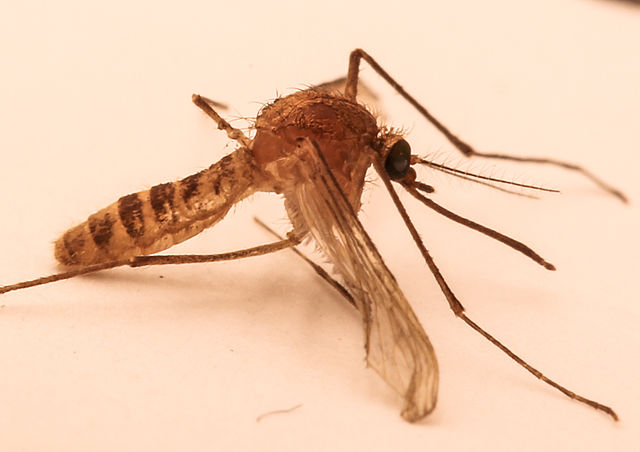
An article published in the journal “Proceedings of the Royal Society B” describes a research on the influence of human activities on the evolution of various species of animals and the plants. According to a team of researchers from the Center for Macroecology, Evolution and Climate at the University of Copenhagen in collaboration with the University of Queensland, humans they are causing the emergence of new species but they can’t replace those that are getting extinct.
The use of the term Anthropocene is becoming more and more common to indicate the current geological epoch in which human beings are seriously affecting the environment with their activities. Climate changes are leading to the extinction of many species but according to the researchers led by Joseph Bull of the University of Copenhagen they’re also forcing the evolution of other species through several mechanisms.
In some cases, it’s the direct contact with human activities to determine changes in a species. Over the millennia, humans have domesticated animal species and intervened on plants to cultivate them. In many cases, plants and animals have been transported to completely different environments. Over the past three centuries, the number of species of plants appeared in Europe exceeds that of plants that have become extinct.
There are cases where the interaction with humans is involuntary. The researchers gave the example of the common mosquito, which adapted to the artificial environment of the London Underground so much that it has become a new species commonly called “mosquito London Underground” by the scientific name Culex molestus (photo ©Walkabout12). These mosquitoes are no longer able to mate with common mosquitos and therefore they’re considered a new species whose evolution was influenced by humans.
The new species born from human beings interventions don’t compensate those that in the meantime have become extinct, often because of human beings too. Professor Martine Maron of University of Queensland explained that counting the number of species doesn’t give an exact idea of the phenomena in progress. The problem is in biodiversity, which is the real factor that gives the idea of the stability of an ecosystem.
A full analysis of the influence of human beings must keep in mind all the factors related to changes that happened and are still happening in ecosystems. It’s the only way to really understand the consequences of human activities and therefore the best way to act to prevent their collapse.
