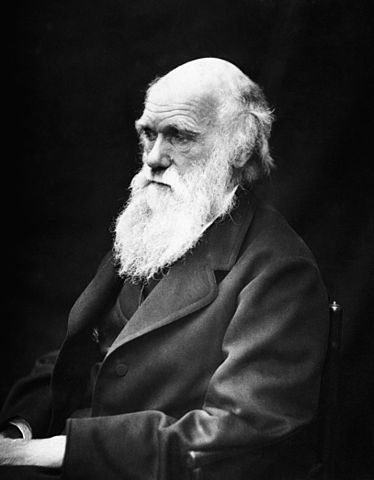
Charles Robert Darwin was born on February 12, 1809, in Shrewsbury, England. His grandparents were the philosopher and free thinker Erasmus Darwin and the industrialist Josiah Wedgwood, and this allowed him to grow up in a wealthy environment in which there were progressive ideas that concerned rational thought but also very practical problems such as the abolition of slavery and the emancipation of women.
Charles Darwin was a teenager when he began to take an interest in the study of animals but his father enrolled him at the Faculty of Medicine and Surgery of the University of Edinburgh with the idea that he’d become a doctor. However, surgery made him sick, and he preferred to study local wildlife. His school grades were poor, and the father went so far as to send him to Christ’s College in Cambridge, where he could start an ecclesiastical career. There, too, his studies had poor results, but the young Charles became more interested than ever in the local flora and fauna and in 1831 took part in a trip to Wales following the geologist Adam Sedgwick for a series of stratographic surveys of the area.
On his return from that voyage, Charles Darwin received a proposal to participate in an expedition of the ship Beagle as a naturalist. Initially, he refused, partly because of his father’s perplexities concerning the long duration of the trip and the lack of retribution, also due to the intervention of his maternal uncle Josiah, he ended up accepting, and on December 27, 1831, he set off on the Beagle for a journey that lasted almost five years.
During the Beagle’s journey, Charles Darwin noticed that on each island of the Galápagos archipelago, there were different species of turtles and birds that had various similarities and various specific characteristics. Those were among the key observations for what became the theory of evolution. During those years, he also collected other observations not only on flora and fauna but also on the geology of the places he surveyed, which were the basis of various scientific essays that were published in the following years.
In 1839, Charles Darwin married Emma Wedgwood, with whom he had ten children.
In the years following the Beagle’s journey, Charles Darwin put together the ideas that became the theory of evolution based on the reproduction of organisms, in which individual variations may emerge with a subsequent natural selection of the variations beneficial for their survival. Similar ideas were expressed by Alfred Russel Wallace, and the two scientists came into contact and exchanged comments and opinions on the subject.
On July 1, 1858, Charles Darwin’s friend, geologist Charles Lyell, presented the theory of evolution to the Linnean Society on his behalf as he was forced to be absent because of the death of his youngest son. In 1859, the essay “The Origin of Species” was published, followed by subsequent works that further developed various parts of that theory.
The theory of evolution caused controversy from the beginning, and Charles Darwin continued to study the subject in spite of the difficulties that were present at the time in palaeontological research due to the scarcity of fossils. On his death on April 19, 1882, he left a remarkable legacy with a theory that was perfected over time. Advances in fields such as paleontology, and at the end of the 20th century the genetic revolution brought new confirmations and knowledge of the mechanisms of mutations unimaginable in the 19th century. These mechanisms are more complex than Darwin had thought, and they’re still under study, but there are no more scientific doubts about the basic concepts, and if we have reached this point, we owe it to him a great deal. Today, Charles Darwin’s works are available online, so anybody can appreciate them.
