August 2020

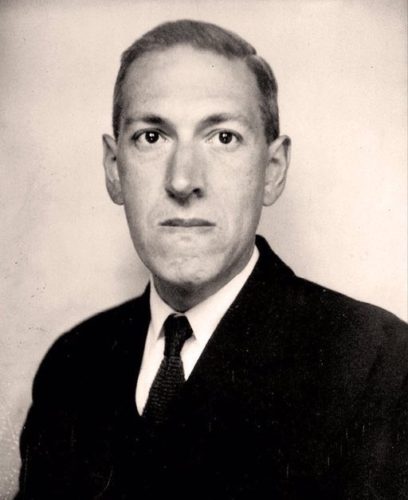
H.P. Lovecraft in June 1934 (Photo Lucius B. Truesdell)

Howard Phillips Lovecraft was born on August 20, 1890 in Providence, Rhode Island, USA. H.P. Lovecraft’s work in the literary field started as a poet, manuscript reviewer, and journalist. In 1919 he published the short story “Dagon”, where he started developing the themes that would mark his career. For the occasion, he used a Mesopotamian deity, but in the following years, he started creating his own mythology.

Some works of H.P. Lovecraft were published posthumously, and over time rose to fame. The so-called Cthulhu Mythos, which include the works that include a pantheon of deities and various totally alien creatures, became the most important part of the author’s works. They include elements of science fiction, fantasy and horror, and ended up influencing generations of writers in those genres.


The Sirian Experiments by Doris Lessing (Italian edition)

The novel “The Sirian Experiments” by Doris Lessing was published for the first time in 1980. It’s the third novel of the Canopus in Argos series and follows “The Marriages Between Zones Three, Four and Five”.

Ambien II is one of the Five, the small group that runs colonial management on behalf of the Sirius empire. Among her responsibilities, she represents Sirius in colonial operations conducted on Rohanda, as Sirius calls the planet Shikasta. This means working together with the Canopus empire on experiments to be conducted on the planet’s population.

The citizens of the Sirius empire are potentially immortal, and this allows Ambien II to see the effects of the experiments conducted on Rohanda with their long-term consequences. Her awareness of what’s happening develops also in her relationship with Klorathy, a colonial administrator of the Canopus empire.

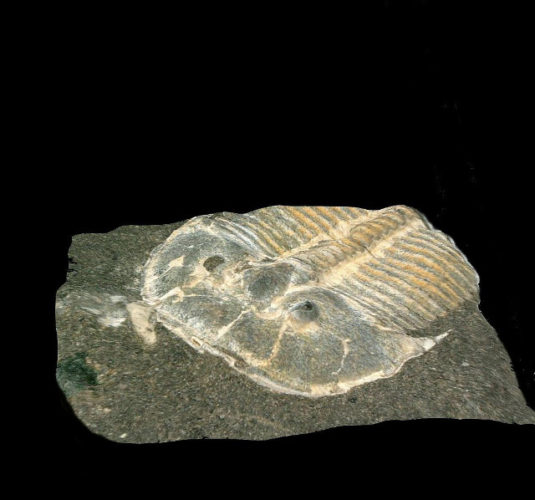
Aulacopleura kionickii fossil (Photo courtesy Brigitte Schoenemann)

An article published in the journal “Scientific Reports” reports a study on the eyes of a fossil of Aulacopleura kionickii, a species of trilobite that lived about 429 million years ago, which offers evidence that it had a vision comparable to that of its distant modern cousins, insects but also crustaceans. Dr. Brigitte Schoenemann of the University of Cologne, Germany, and Euan Clarkson of the University of Edinburgh, Scotland, examined fossil eyes using digital microscopy to find in those compound eyes structures similar to those that exist today in bees, dragonflies, and many crustaceans with diurnal habits.

The population model used in the research

An article published in the journal “PLOS Genetics” reports a genetic study showing the traces of various interbreedings between different species of hominins. Melissa Hubisz and Amy Williams of Cornell University and Adam Siepel of Cold Spring Harbor Laboratory developed a genetic analysis software that can recognize relations and applied it to a group of genomes that includes two Neanderthals, a Denisovan, and two African modern humans. The result is evidence that 3% of Neanderthal DNA came from ancient humans in an interbreeding between 200,000 and 300,000 years ago, 1% of Denisovan DNA came from an older species, maybe Homo erectus, and 15% of that “superarchaic” DNA may have been passed on to modern humans.

Ivory: A Legend of Past and Future by Mike Resnick

The novel “Ivory: A Legend of Past and Future” by Mike Resnick was published for the first time in 1988.

Duncan Rojas is an expert on rare historical artifacts who works for a big corporation that publishes guides on the subject. His experience leads him to search for lost artifacts and authenticate the ones that are found, but even by his standards Bukoba Mandaka’s request is out of the ordinary. The man who calls himself the last of the Maasai asks him to find the tusks of the Kilimanjaro Elephant after their traces were lost millennia earlier.

To find that unique trophy, Duncan Rojas starts examining all available interplanetary archives. Gradually, he manages to reconstruct the history of the tusks and at the same time realizes how closely they were connected to the Maasai. Bukoba Mandaka promises to explain to him the reasons why he absolutely wants to get his hands on the tusks only after he finds them.