
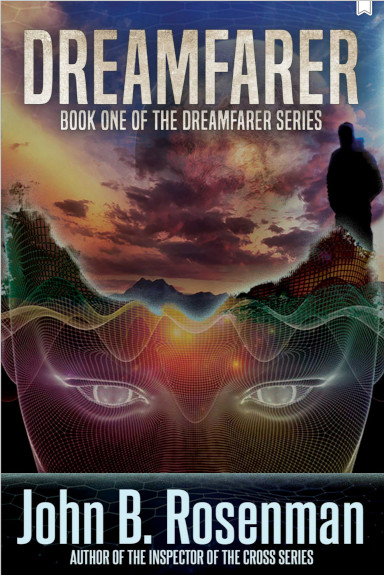
The novel “Dreamfarer” by John B. Rosenman was published for the first time in 2021. It’s the first book in the Dreamfarer series.
When Sam Adams awakens from his simulated life and is told he has developed a kind of resistance to the simulation systems, his prospects are bleak. In the material reality of what remains of the USA, people like him must endure a dull life, knowing they will never again experience the excitement that comes with a simulated identity.
Sam Adams’ reactions are negative: his anger and bitterness are intense, and when he meets Trina, a woman in his same situation, he tells her he’d like to shut down the entire simulation system thousands of people are connected to. Trina reveals that she’s part of a rebel group that wants to do just that and involves him in the plan, but not all the members of that group are happy with his initiative. Diana believes Trina has jeopardized the entire operation and wants to eliminate her and Sam.
“Dreamfarer” begins a series set approximately 90 years after World War III, in which the use of atomic weapons has completed the devastation of Earth’s ecosystems. A new Cold War has begun in space, while the survivors are almost all permanently connected to simulations where they can live out their fantasies.
The fact that some people develop a sort of immunity to the simulations is a key element of the plot. It’s also interesting that the influence of those simulations can have an impact on material life, which in Sam’s case means he has acquired real skills from his adventures.
Through what happens to Sam Adams after he becomes immune to the simulations’ stimuli, John B. Rosenman describes that future. Slowly, readers understand how the future USA is governed and the risks of new wars with the remnants of the nations still capable of space travel. The protagonist has many conversations with other characters that allow him to get updated on the situation of humanity and the rebel group planning sabotage with the ultimate goal of overthrowing the government.
There’s a decidedly dystopian element to the description of 2170, with details being slowly revealed. The novel’s strength, in my opinion, lies in the fact that the story’s development goes far beyond a dull division between heroes and villains. At a certain point, Sam Adams finds himself dealing with the new US president, whose surname happens to be Washington. Sam believes he’s above all an honest man and starts believing he could truly rebuild the nation.
On the other hand, the members of the rebel group aren’t exactly spotless heroes. Indeed, for a small group, there are significant differences in their views on what to do and their motivations. Conflicts within the group threaten to become the greatest danger, even greater than the risk of being discovered by the authorities.
The ethical and moral gray areas force Sam Adams to make choices that are at times truly difficult. Every time he thinks he’s understood something crucial about the situation, some important event reveals something new and unexpected, complicating the situation and, consequently, his decisions.
Sam’s difficulties with judgment also exist on a strictly personal level, given that Trina isn’t the most balanced person. Her emotional instability pushes him into a relationship with Diana, complicated for other reasons. I usually find love triangles terrible, but in this case, John B. Rosenman creates a relationship that goes far beyond the clichés of this type of plot.
“Dreamfarer” has its own ending, though it’s open to new developments that will be revealed in sequels, so you can read it as a standalone novel and then decide if you want to continue with the series. I recommend it for its combination of narrative elements and the ethical and moral questions it explores, which offer much food for thought. You can find it on Amazon USA, UK, and Canada.
