
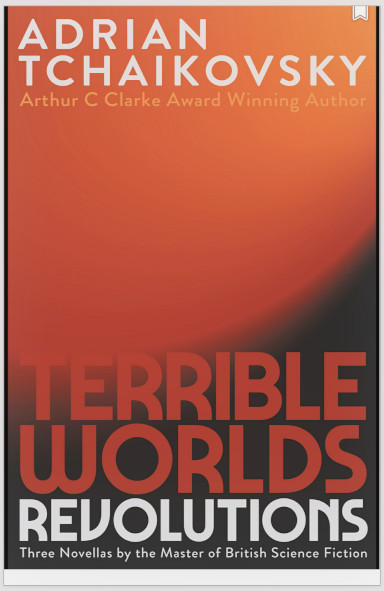
The novella “Ironclads” by Adrian Tchaikovsky was published for the first time in 2017. In 2023, it was published as part of the anthology “Terrible Worlds: Revolutions” as well.
Sergeant Theodore “Ted” Regan is charged with leading a small team on a military incursion into enemy territory to free an important figure, the Scion of a very rich family. The details are a bit vague, and Regan knows that the rescue was set up because he’s a Scion of a prominent family who was serving in Sweden during the war, but little else.
“Ironclads” takes us to a near future where wars are fought for purely economic reasons. These motivations aren’t very different from those that drive wars today. What is different is that the decisions are officially made by big corporations, and their official representatives are directly involved in the wars.
Adrian Tchaikovsky begins this novella with a reference to the wars of the Middle Ages, when nobles could go to war with the best weapons and armor. The future in which the story is set is similar in this respect, in that members of rich families with financial interests in a war can participate with weapons and armor based on extremely sophisticated technologies. Highly sophisticated exoskeletons used by future soldiers are certainly not a new idea, but in this case, only the Scions of rich families can afford them.
Medieval and future wars also have in common that the dirtiest and riskiest part of battles is faced by soldiers whose weapons and protection might not be exactly the best. These soldiers are ordinary people, and even in the future, they will often come from poor families. They will be professionals who enlist because the armed forces offer career prospects, even if only as non-commissioned officers at best.
The story is narrated in the first person by Ted Regan, and the reader participates somewhat in his operation, sharing his cynicism and confusion about the details of what he’s doing. He’s told the bare minimum he needs to know to carry out operations as ordered. Economic interests in a war create different factions, and in Sweden, this means fighting among various official armies, mercenaries, partisans, spies, and who knows who else. Representatives of various corporations, who may be members of prominent families or the equivalent of low-level executives, are involved in various ways.
The operation led by Ted Regan is supposed to be a covert raid, so open clashes are the exception. However, even under the best of conditions, unforeseen events can happen, and the rescue operation quickly turns out to be in conditions that are not ideal. Regan and his team end up in situations where it’s unclear whether the combatants they encounter are friends, enemies, or neutral—if neutrality exists in the situation described by Adrian Tchaikovsky.
All this makes “Ironclads” a story that one hopes is science fiction, but fears it isn’t. It’s certainly not a classic military science fiction story due to its closeness to reality and the centrality of the issues surrounding the various warring factions. The confusion that emerges from the presence of those factions, with relationships that aren’t always clear, may disappoint readers seeking a different kind of story. Instead, it makes it perfect for readers seeking a story that scathingly exposes the dirtier side of the interests behind a war. You can find the anthology “Terrible Worlds: Revolutions” on Amazon USA, UK, and Canada.
