
Warning. This review contains several spoilers about TV show “Wayward Pines”!
On July 23 the TV show “Wayward Pines” ended.
The series is an adaptation of a trilogy of novels written by Blake Crouch. Conceived as a mini-series of 10 episodes, although it leaves the door open to a continuation, it was developed by Chad Hodge, who involved in the production the director M. Night Shyamalan.
The TV show “Wayward Pines” was purchased by Fox, which decided to promote it as a special event worldwide. The pilot episode was made available online in April 2015 and the normal TV programming began on May 14, 2015 with the broadcast in about 125 countries on the same day.
“Wayward Pines” takes inspiration from previous TV shows such as the classics “The Prisoner” and “Twin Peaks” but it develops some elements in a different science fiction key. The series begins when the US secret service agent Ethan Burke is sent to the town of Wayward Pines to look for two missing colleagues and find himself in a place that immediately seems very out of the ordinary.
“Wayward Pines” cast consists of:
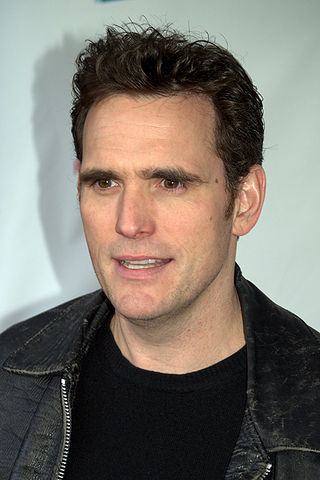
- Matt Dillon (photo ©David Shankbone) as Ethan Burke
- Carla Gugino (photo ©David Shankbone) as Kate Hewson
- Toby Jones as David Pilcher / Dr. Jenkins
- Shannyn Sossamon as Theresa Burke
- Reed Diamond as Harold Ballinger
- Tim Griffin as Adam Hassler
- Charlie Tahan as Ben Burke
- Melissa Leo as Pamela Pilcher
- Juliette Lewis as Beverly Brown
- Terrence Howard as Arnold Pope
Initially, “Wayward Pines” reminded me in particular “The Prisoner” with the protagonist who arrives in a town seemingly idyllic but that hides an absolute control over its population. Compared to the ’60s the style changed considerably so this show hasn’t surrealistic tones but from the beginning is quite brutal.
Agent Ethan Burke is isolated from the rest of the world and quickly discovers that there are forces hostile to him, beginning with sheriff Pope. He realizes that in Wayward Pines there’s mass surveillance system that makes it impossible for him to contact anyone on the outside and at the same time leads him to wonder what’s going on in that town.
The been there done that feeling is only partly offset by a number of anomalies. In Wayward Pines, Ethan Burke finds Kate Hewson, one of his two missing colleagues and his former lover. He met the last time five weeks before but she claims she lived there for twelve years and actually looks aged.
In Seattle, Theresa Burke, Ethan’s wife, tries to figure out what happened to her husband, apparently vanished into thin air. Her personal investigations lead her and their son Ben to Wayward Pines for a family rather complicated reunion. The events experienced by Ethan Wayward Pines and those experienced by Theresa and Ben before they arrived in town are shown as taking place simultaneously. Only later the truth is revealed.
With the whole Burke family in Wayward Pines, we’re showed more of the indoctrination the citizens are subjected to and the harsh local laws, that can even lead to a public execution. The confrontation between Ethan and sheriff Pope gets exacerbated but this seemed to me a weak element, developed to add drama without worrying too much about how much sense it actually makes.
My problem is that Pope, besides being an over the top character, looks absolutely loyal to Wayward Pines’ governants. For this reason Ethan Burke is held under tight control giving the impression that the secret agent and his family are expendable if they don’t comply to the rules. However, when Ethan kills Pope, the governants appoint him sheriff in his place even if he gave no sign of wanting to abide by certain rules.
Ethan decides to cooperate at least in part but always in his own way. It’s the clearest case of ambiguity left in the motivations of some characters, in this case especially by those who govern Wayward Pines. This happens several times during the show but looks more like a way to facilitate the twists without much thought to the characters’ consistency.
The characters’ motivations seem less confusing when we finally discover the truth about Wayward Pines. Not all secrets are revealed immediately but knowing that the year is 4028, that Dr. Jenkins is actually the scientist David Pilcher and secretly governs the town and that nurse Pam is his sister and helps him is crucial for plot developments.
The second part of the show is the one in which the metaphor of today’s society, in particular the American one, is developed further. Initially, the element of mass surveillance was the one in the spotlight and it took a few episodes before completing the metaphor.
In the eighth episode David Pilcher tells Ethan Burke that there can be freedom or safety, not both. It’s, bluntly, what in the USA and other Western countries the leaders are trying to persuade their peoples about to accept the erosion of civil rights in favor of an alleged safety.
In Wayward Pines, this means mass surveillance but also keeping people unaware of the truth. The students, considered young enough to accept the truth without going crazy, are revealed the truth, yet are indoctrinated even more than the adults.
The consequences of the David Pilcher’s policy are disastrous and end up creating internal enemies that threaten to destroy everything. A group of citizens created a resistance movement with results that go beyond their plans but in a negative way because innocents become their victims too.
Even among well indoctrinated youngsters there are violent elements, though for reasons opposite to those of the resistance. Some hotheads led by a guy with a Hitler hairstyle look for some vigilante justice when Ethan Burke jails some members of the resistance rather than executing them quickly.
The series finale confirms the script writers’ tendency to favor twists above all. Personally, I was a little disappointed because in the end a new hope was given to the survivors only to have an epilogue that was supposed to surprise the audience turning everything upside down giving only a very vague explanation of how that happened. For me it’s not a problem if something is left to the imagination but in this case it all seems too forced just to have a final twist.
In my opinion, “Wayward Pines” had ups and downs with a potential not completely fulfilled. One problem is that the story is inspired by shows that have become legendary but it’s not at their level and thus looks worse than it actually is. Various elements of the show have also been used in other television and cinema productions of recent years making them exploited too much.

In particular, mass surveillance has long been part of everyday life so at best seeing it used in a TV show is boring. Worse still, many people probably get disturbed by this element because they prefer to pretend it doesn’t exist and live with their head bowed, hoping not to have any trouble.
In the end, it’s no surprise that the audience in the USA was not enough to renew “Wayward Pines” though I understand that it was actually pretty good. On the bright side it was conceived as a mini-series so it had its conclusion whereas many other shows get canceled and they stories are left hanging.
