Biology

Bacteria sample (Image courtesy JAMSTEC. All rights reserved)

An article published in the journal “Nature Communications” reports the discovery of living colonies of bacteria in sediment layers up to 101.5 million years old in the depths of the Pacific Ocean area called the South Pacific Gyre. A team of researchers led by JAMSTEC’s Dr. Yuki Morono drilled the ocean floor in an area where it’s nearly 6 kilometers deep to collect many sediment samples up to 100 meters below the ocean floor. This is the Pacific area with the lowest productivity and the least amount of nutrients available, yet the researchers found bacteria in the sediments that are millions of years old and managed to bring them back to full metabolic activity.

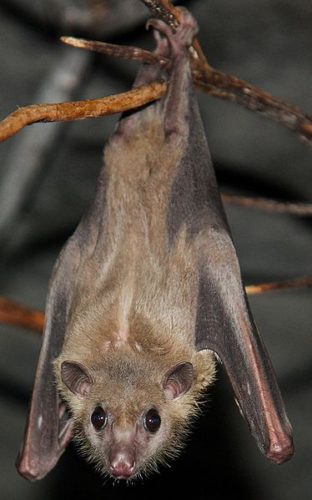
Rousettus aegyptiacus

An article published in the journal “Nature” reports a genetic research on bats which reveals some of their characteristics that makes them particularly resistant to viruses and also to cancer. A team of scientists from the Bat1K consortium, which aims to sequence the genomes of all bat species, generated and analyzed six genomes of the highest quality that make them ten times more complete than the ones previously available. This allowed to identify a series of genes that help explain the evolution of flight and echolocation.

Phylogenetic relationships of the archaic fragments sequenced in Icelanders

An article published in the journal “Nature” reports a genetic study carried out using data obtained from 27,566 Icelanders to understand which parts of modern humans’ genome contain genes inherited from Neanderthals following interbreedings, and what role it plays in modern humans. A team of researchers performed a comparative analysis with hominin genomes sequenced at the Max Planck Institute for Evolutionary Anthropology (MPI-EVA) in Leipzig, Germany, finding many different genes scattered in the Icelandic genomes. By putting them together, they reconstructed at least 38% of the Neanderthal genome using 14 million fragments. A surprise came from the discovery of Denisovans genes, usually present in Asian populations, but it’s possible that they too were inherited from Neanderthals who descended from interbreedings with Denisova.

Ethanoperedens thermophilum in red and its symbiote Desulfofervidus auxilii in green

An article published in the journal “mBio” reports the discovery of an archaeon that feeds on ethane in hydrothermal vents at the bottom of the Guaymas Basin, in the central area of ​​the Gulf of California. A team of researchers led by Gunter Wegener of the Max Planck Institute for Marine Microbiology proposed the name Ethanoperedens thermophilum for this archaeon that lives in symbiosis with a bacterium already known for which Wegener and his collaborators proposed the name Desulfofervidus auxilii. The interest in these microorganisms goes beyond biological curiosity because the metabolic process that degrade ethane is reversible, and this means that other similar archaea could transform carbon dioxide into ethane. This would lead to their use for the production of ethane, the second most common component of natural gas after methane with 15%.

Specimens of Himalayan red panda (Ailurus fulgens) and Chinese red panda (Ailurus styani)

An article published in the journal “Science Advances” reports genetic evidence that there are two distinct species of red panda, or lesser panda, (Ailurus fulgens) and not two subspecies, as per taxonomic classification that existed for over a century and based on morphological differences. A team of researchers carried out genomic research which led to the conclusion that there’s a substantial genetic divergence that adds to the differences found with the classic methods. Consequently, a new classification was proposed with the species Himalayan red panda (Ailurus fulgens) and Chinese red panda (Ailurus styani) instead of the two subspecies. If confirmed, this result poses new problems in saving red pandas from extinction.