Biology

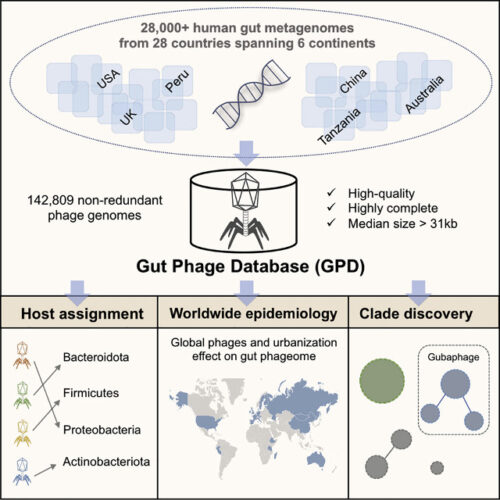
Illustration of the diversity of bacteriophage viruses of the human gut microbiome

An article published in the journal “Cell” reports the discovery of over 140,000 bacteriophage viruses that live in the human guts, added to a new database called the Gut Phage Database (GPD). A team of researchers led by Dr. Luis Camarillo-Guerrero of the Wellcome Sanger Institute analyzed more than 28,000 gut microbiome samples collected from different parts of the world to detect bacteriophage viruses using metagenomics. Over half of the viruses identified were unknown so far. These viruses attack bacteria, so they can help the body’s immune responses.

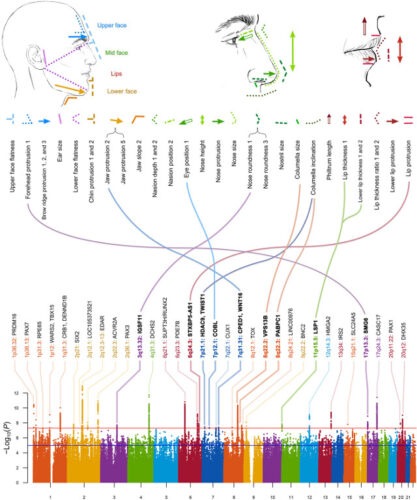
Scheme of facial features associated to various genes

An article published in the journal “Science Advances” reports a genetic study on Native Americans of South America concerning the identification of a number of their genetic regions that influenced their facial features. Some of them were inherited from the Denisovans, another human species now extinct. A team of researchers used genetic data from 6,192 Latin American volunteers involved in a large study by the CANDELA (Consortium for the Analysis of the Diversity and Evolution of Latin America) consortium to identify genes inherited from the Denisovans. This will help investigate the ancestry of Native Americans in Asia, where the only traces of this species have been found.

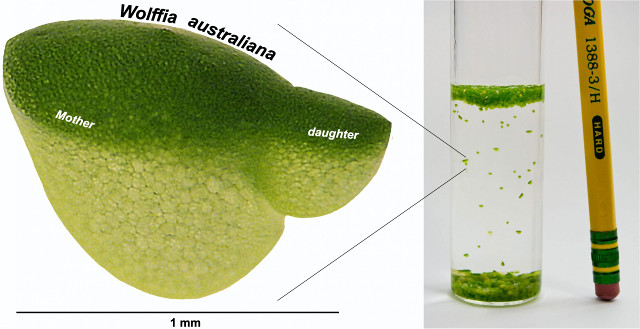
Wolffia australiana

An article published in the journal “Genome Research” reports the DNA sequencing of Wolffia australiana, considered the fastest growing plant in the world. A team of researchers led by Todd Michael of the Salk Institute in La Jolla, California, USA, used advanced genetic sequencing techniques to accomplish this task. Understanding Wolffia australiana’s genetic characteristics means not only understanding how it grows so quickly but also how this plant is optimized for growth at the expense of other functions such as root growth and pest defense. The importance of this study also lies in the fact that the Wolffia australiana is part of the diet of some Southeast Asia populations, and a careful selection of its characteristics could make it an important protein source.

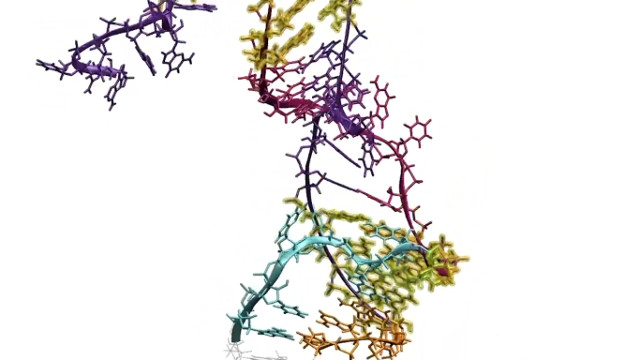
A moment of the RNA folding process (Image courtesy Lucks et al. All rights reserved)

An article published in the journal “Molecular Cell” reports the reconstruction of the folding of an RNA fragment, with the consequent creation of videos of the process. A team of researchers led by Julius Lucks of Northwestern University in Evanston, Illinois, USA, applied a method that was called Reconstructing RNA Dynamics from Data (R2D2) to obtain details of RNA movements. Specifically, the folding of the sequence called signal recognition particle (SRP) of a bacterium of the Escherichia coli family was reconstructed. Understanding how RNA work is crucial for improving biological and medical knowledge.

Australian lungfish (Neoceratodus forsteri)

An article published in the journal “Science Advances” reports a study on Australian lungfish (Neoceratodus forsteri) that offers new information on the evolution of fish fins into tetrapod limbs. A team of researchers led by Dr. Joost Woltering of the German University of Konstanz studied, in particular, the anatomical and genetic characteristics of Neoceratodus forsteri’s embryos. The result was the confirmation of the importance of some genes with new information on the genes involved and the discovery of a primitive hand in this fish’s fins, suggesting an evolution of fingered limbs through embryonic changes.