
Electronics

Blog about electronics

Rene Haas

The leading graphics processor company NVIDIA and the Japanese telecommunications holding SoftBank Group Corp. have reached an agreement to end the deal to acquire the British microprocessor company Arm Ltd. that was reached in September 2020. Negative or at least concerned opinions expressed repeatedly over time by the USA, UK, and EU antitrust authorities resulted in NVIDIA’s inability to proceed with the acquisition. Arm CEO Simon Segars resigned and was replaced by Rene Haas, who was already the company’s president. The new plan consists of an IPO for Arm, perhaps at the London stock exchange.

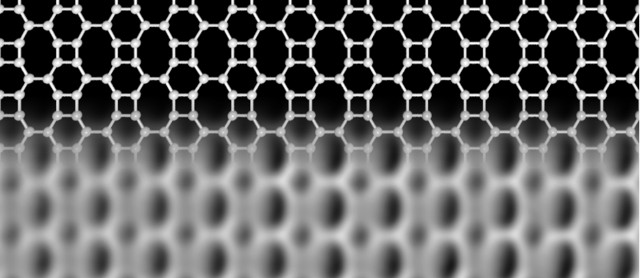
Biphenylene network's structure

An article published in the journal “Science” reports the production of sheets as thick as one atom of biphenylene, also confirming that the material has metallic properties, a feature that was theorized but not proven so far. A team of researchers created an ordered lattice made up of squares, hexagons, and octagons. This structure reminds in various ways graphene sheets, a material that for years has been considered very interesting for many possible applications but is still complex to produce at an industrial level at low costs. For some applications, such as an anode material in lithium-ion batteries, biphenylene networks might be better than graphene.

The ANA Avatar XPRIZE website's home page

Peter Diamandis, Executive Chairman of XPRIZE, announced the start of a new initiative called ANA Avatar XPRIZE with the aim of developing avatars. A competition that will last four years with a prize of $10 millions offering teams all over the world the chance to develop robotic systems that can’t only move but also transmit visual and auditory sensations interacting with the environment and other people like if the user was on site.

Graphene-quantum dots-CMOS-based sensor (Image courtesy ICFO/ D. Bartolome)

An article published in the journal “Nature Photonics” describes the development of the first graphene-based camera. A team of researchers from the Institute of Photonic Sciences (ICFO) integrated a CMOS-type circuit with graphene creating a high resolution image sensor consisting of hundreds of thousands of graphens-based photodetectors and quantum dots. The camera is sensitive to ultraviolet, visible and infrared light at the same time.

Hugo Gernsback was born 130 years ago

Hugo Gernsback was born on August 16, 1884 in Bonnevoie, an area south-east of Luxembourg City, Luxembourg. He was first first of all a technology pioneer, an inventor who at the end of his life held 80 patents. He founded many magazines in various fields, from electronics to science fiction, founded the radio station WRNY and was a pioneer of amateur radio. In 1926, Hugo Gernsback founded “Amazing Stories”, the first magazine dedicated to the genre he called “science fiction”. In 1953 for the first time the Hugo Award was awarded for the best science fiction works of the year. Gernsback died on August 19, 1967 in New York.