Writers

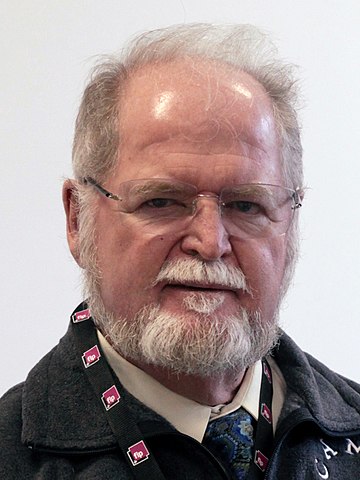
George R. R. Martin in 2017

George Raymond Martin, this is his birth name, was born on September 20, 1948 in Bayonne, New Jersey, USA. Years later he added the name Richard after chosing it as his confirmation name.

Ever since he was a child, George R. R. Martin showed his desire to write stories and in those years he read a lot of science fiction, fantasy and horror from previous years, becoming fan of Marvel comics. Through the readers letters published in the comics, he came into contact with the fandom and various fanzines, where he published a number of stories.

After years spent working mainly on television, also with various projects that were not successful, George R. R. Martin got tired, also for the limits imposed by budget and the rigid length of television episodes. In the early 1990s he started writing a fantasy saga that was originally a trilogy but was later expanded to better develop the story: in 1996 he published “A Game of Thrones”, the first novel of the saga that enormously increased the author’s fame.

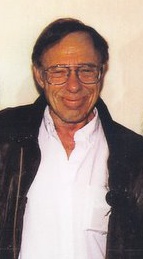
Robert Sheckley

Robert Sheckley was born on July 16, 1928 in Brooklyn, New York, USA.

After graduating from New York University in 1951, Robert Sheckley tried more jobs, also to maintain the family he created after his first marriage and the birth of his son Jason. He also started to work as a science fiction writer by selling his first story, “Final Examination”, at the end of 1951 to the magazine “Imagination”.

Robert Sheckley’s humor, with strong elements of satire, made him famous from the beginning of his career, also thanks to the fact that in his short stories he was able to exploit them with greater intensity. Several of his stories got adapted in a more or less faithful way for radio, television and cinema. He’s an author who became famous among readers and also inspired authors of later generations.

Harlan Ellison address fans at Minicon 41 (photo ©David Dyer-Bennet)

The news came of the death of writer and screenwriter Harlan Ellison: the cause hasn’t been released but he died yesterday in his sleep.

Harlan Ellison’s character was certainly not easy but behind his disputes there was an artist who worked in various ways, sometimes not easy to notice immediately. He wrote very few novels so his visibility has always been lesser than that of many colleagues and the fact that he became famous and appreciated for the courage of his works says a lot about his importance in the field of science fiction.

Larry Niven in 2010 (photo ©Ceridwen)

Laurence van Cott Niven was born on April 30, 1938 in Los Angeles, California, USA. In 1962 Larry Niven earned a Bachelor of Arts in mathematics from Washburn University, Topeka, Kansas. In 1964 he decided to become a writer and published the first story, “The Coldest Place”. It also begins the Tales of Known Space, a future history that covers about a millennium of history from the human beings’ first attempts of expansion into the solar system.

In addition to continuing that cycle, Larry Niven began various collaborations with some of his fellow writers, in some cases to write novels set in his Known Space. The most important collaboration is with Jerry Pournelle, with whom Larry Niven has written several novels including the two of the Motie mini-cycle “The Mote in God’s Eye” (1974) and “The Gripping Hand”, also known as “The Moat Around Murcheson’s Eye” (1993).

Larry Niven continues his work as a writer so we can expect new works, written on his own or in collaboration. When he wrote his first science fiction stories, many fellow writers were moving towards new trends such as the new wave movement but he preferred more traditional themes, which at the time seemed obsolete to many people. Niven developed them in a solid way, basing his stories on plausible scientific and technological premises, eventually influencing writers of the next generations.

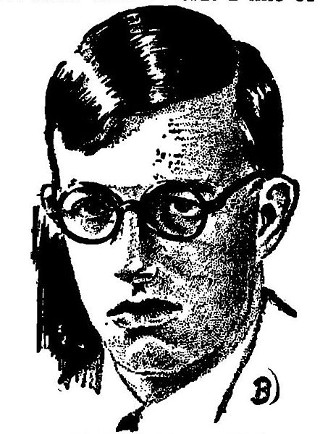
Portrait of Jack Williamson in Air Wonder Stories in 1929

John Stewart Williamson was born on April 29, 1908 in Brisbee, in what was then called the Arizona territory, in the USA. At the beginning of his career, Jack Williamson was influenced mainly by Abraham Merritt but was also impressed by the works of Miles J. Breuer and decided to contact him. The two of them ended up collaborating and published together works such as “The Girl from Mars” in 1929 and “Birth of a New Republic” in 1931.

In 1947 Jack Williamson published the novelette “With Folded Hands”. The concepts were expanded and developed somewhat differently in the novel “The Humanoids” (1949). The author wrote another sequel many years later, “The Humanoid Touch” (1980).

In the 1950s, Jack Williamson began a collaboration with his fellow writer Frederik Pohl. The two of them published several novels, in particular the Starchild trilogy: “The Reefs of Space” (1964), “Starchild” (1965) and “Rogue Star” (1969).

In 2001 Jack Williamson published the novella “The Ultimate Earth”, winner of the Hugo and Nebula awards. He’s the oldest writer to win those awards in any category. His last novel, “The Stonehenge Gate”, was published in 2005.

Jack Williamson died on November 10, 2006. In almost 80 years of activity he went through many phases of the evolution of science fiction, adapting to new things and managing to maintain a freshness in his works. He was a truly prolific and long-lived author who marked decades of science fiction.