Warning. This review contains spoilers about the third season of the TV show “Westworld”!
On May 3 the third season of the show “Westworld” ended.
The second season of “Westworld” offered a mix of introspection, various philosophical elements, and intrigue mixing philosophical, ethical, and moral themes. The initial themes of the show, related to the emergence of self-awareness in some hosts, the park robots, and the relationship between creator and creature, slowly gave way to power clashes outside and inside the park.
The second season finale, with the developments of the subplots related to Dolores and Maeve, made a sort of battlefield among various factions even bigger. The park and Delos, the company that owns it, become part of a broader setting.
“Westworld” third season cast consists of::
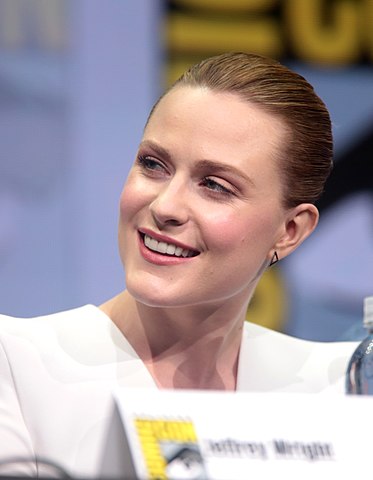
- Evan Rachel Wood (photo ©Gage Skidmore) as Dolores Abernathy
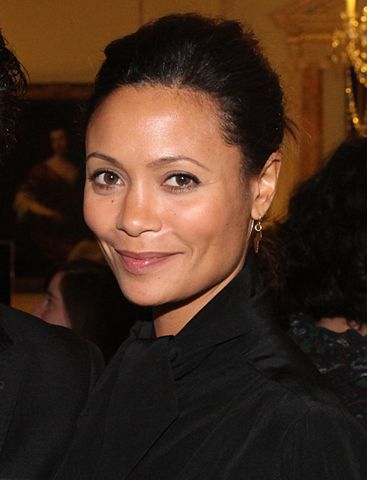
- Thandie Newton (photo ©Ministry Of Stories) as Maeve Millay
- Aaron Paul as Caleb Nichols
- Ed Harris as William, the Man in Black
- Jeffrey Wright as Bernard Lowes
- Luke Hemsworthy as Ashley Stubbs
- Simon Quarterman as Lee Sizemore
- Angela Sarafyan as Clementine Pennyfeather
- Tessa Thompson as Charlotte Hale
- Tessa Thompson as Charlotte Hale
- Vincent Cassel as Engerraund Serac
- Tao Okamoto as Hanaryo
The fragmentation in various timelines of the second season made it sometimes difficult to follow. The third season seemed much more linear from the start, although it remained divided into subplots that intertwine in various ways. Flashbacks were used to show important events, typically related to various characters’ stories, but these are fragments of episodes set mostly in a single timeline.
In some ways, the whole world becomes an extended version of the amusement park, in the sense that some disturbing similarities are shown. Caleb Nichols is a new character who is crucial because he’s an ex-soldier who theoretically lives as a construction worker, but in fact he makes money above all by offering his services to commit various crimes. From the beginning it can be seen how his life is the result of various manipulations, and his meeting with Dolores shows the similarities between the two of them from that point of view.
A very powerful artificial intelligence called Rehoboam is used by Incite to control and manipulate the population by exploiting the enormous amount of information it collects. From this point of view, the themes of “Westworld” get close to those of “Person of Interest”, another extraordinary creation by Jonathan Nolan, albeit with notable differences in their development. The third season of “Westworld” begins in 2058, and the manipulation possibilities are much more sophisticated and deep.
However, the development of population control and manipulation issues at the global level also leads to what for me is the only real flaw of this season, the use of Dolores and Maeve. After two seasons in which these two protagonists were developed, in the third one they often seemed a little depersonalized. They recovered in the ending, but outside the park they acted several times in ways that seemed useful to the plot, but without digging in their motivations as happened in previous seasons.
Honestly, sometimes it seemed that there was some padding to show the high production values and sophisticated style, and to stress the twists. As the finale got close, we saw the substance, and also some reflections closer to the beginning of the show, but applied to humans as well. Dolores’ considerations about ugliness and beauty, and free will give us a portrait of humanity that’s not very nice, but offer at least some hope.
The future is chaotic and the presence of the former hosts adds more unknowns, as shown by William’s personal stories, that in this season was mainly about dealing with himself. The epilogue of the season after the end credits shows a new twist about him, as in the second season.
In the end, this third season of “Westworld” was certainly not perfect, but the similarities between the park hosts and humans allowed to develop important themes. In my opinion the merits remain far superior to the flaws for a show that continues to offer food for thought about the future and the present as well.
