
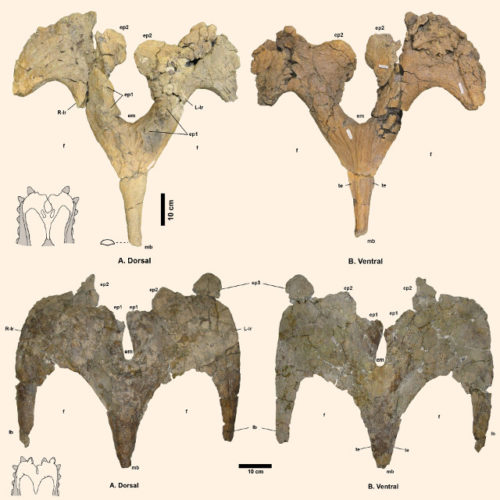
The discovery of two new species of horned dinosaurs brings new information on their evolution
An article published in the journal “PeerJ” reports the discovery of two species of horned dinosaurs that lived about 75 million years ago, in the Cretaceous period, in today’s New Mexico, USA. Dr. Denver W. Fowler and Dr. Elizabeth A. Freedman Fowler examined fragments of skulls discovered in the Kirtland Formation, New Mexico, and attributed them to two hitherto unknown species of herbivorous dinosaurs from the ceratopsid family naming them Navajoceratops sullivani and Terminocavus sealeyi. According to the two researchers, these are transitional species between two previously known species: Pentaceratops sternbergii and Anchiceratops ornatus. This could also be true for a third possible species that appears to belong to the same group even if researchers haven’t identified it with certainty due to the fragmentary nature of the fossils discovered.
