
June 2021

The Making of the Representative for Planet 8 by Doris Lessing (Italian edition)

The novel “The Making of the Representative for Planet 8” by Doris Lessing was published for the first time in 1982. It’s the fourth novel of the Canopus in Argos series and follows “The Sirian Experiments”.

Planet 8 has been a utopia for centuries thanks to the ideal environmental conditions for the life of the sentient species that inhabits it. However, when the planet suddenly enters an ice age, the conditions change dramatically within a few decades, and many planetary life forms are struck hard.

Doeg is one of the Representatives of Planet 8 who, among other things, acts as an intermediary with the agents of Canopus who arrive on their world. According to Canopus’ plans, the inhabitants of Planet 8 will be transported to the planet Rohanda to join the race that already inhabits it, so why don’t their spaceships arrive? Johor, a Canopus agent, arrives to explain what happened.

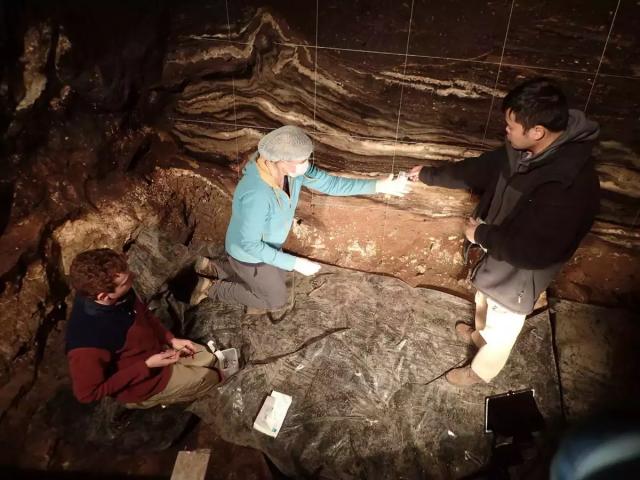
Researchers Zenobia Jacobs, Bo Li and Kieran O'Gorman during sample collection (Photo courtesy Dr. Richard G. Roberts. All rights reserved)

An article published in the journal “Nature” reports the results of the sequencing of DNA found in the sediments of the Denisova Cave, in Siberia. A team of researchers achieved the largest sequencing ever conducted on genomes recovered from sediments from a single site with 728 samples. The results offer a picture of the occupation of that cave over a period of more than 300,000 years by three human species: the Denisovans, the Neanderthals, and the Homo sapiens. However, most of the samples turned out to be DNA from various animals, which is also useful because it offers information on the connection between humans and the species that various populations ate.

Engines of War by George Mann

The novel “Engines of War” by George Mann was published for the first time in 2014.

The War Doctor is involved in a Time Lords attack on a Dalek stronghold but the target is revealed to be an ambush. The consequence is that the Battle Tardis fleet is destroyed by superior enemy forces while the Doctor’s Tardis is damaged and crashes on the planet Moldox.

There is still a human population on the planet and the Doctor knows this means that the Daleks need slaves to work for them or to use for some experiment. The encounter with Cinder, a girl who lives on the planet, leads him to discover a terrible new Dalek weapon. Warning the Time Lords of the new danger is crucial, but when Rassilon decides measures that will have an enormous cost in terms of lives, the Doctor must turn against his people.

Ubik by Philip K. Dick

The novel “Ubik” by Philip K. Dick was published for the first time in 1969.

Glen Runciter is the owner of an agency that offers the services of inertials, people who can neutralize psi powers and thus prevent them from gaining access to business secrets. His wife Ella helps him even though she’s been dead for a long time because she’s kept in half-life in a so-called moratorium. Unfortunately, her conscience was attacked by the one from a boy in half-life whose mental signals are very strong.

Joe Chip, a technician employed by Glen Runciter, meets Pat Conley, who has the power to change the past. The agency receives an request for inertials from a company based on the Moon and Runciter decides to include Pat as well in the intervention team. The job on the Moon turns out to be a trap but it’s only the beginning of a series of strange events.

A schematic of how the system called genomatnn recognizes adaptive introgression

An article published in the journal “eLife” reports the development of an approach based on convolutional neural networks (CNNs) to identify genes inherited from other species such as Neanderthals that brought positive effects. A team of researchers led by Graham Gower of the Danish University of Copenhagen developed this deep learning technique to examine genomes of modern humans for examples of what is technically called introgression, which means genes that a hybrid between two species brought into one of his parents’ species. Various possible examples have been found, for example, genes inherited from Denisovans have been found in Melanesians that affect various metabolic and disease-related traits.