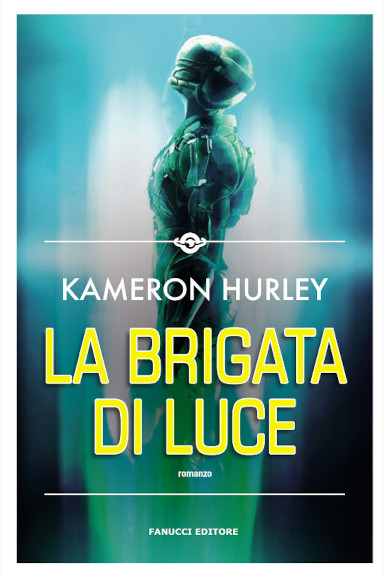
The novel “The Light Brigade” by Kameron Hurley was published for the first time in 2019.
Diez is one of the new recruits trained to fight for their corporation against the Martian colonists. The soldiers are sent to the battlefields by transforming them into light and then rematerializing them at their destination. The process is not without risks, and sometimes a soldier rematerializes where there’s already something.
During those trips, Diez starts to not recognize team members and destination places. Despite the confusion, Diez tries to continue fighting trying not to reveal any memory holes. However, the memory fragments start forming a consistent picture that goes against Diez’s assumptions about the war.
“The Light Brigade” can be considered a military science fiction novel but it’s much more. It can be compared to “Starship Troopers” by Robert A. Heinlein but the tone and positions expressed by Kameron Hurley are definitely closer to those found in “The Forever War” by Joe Haldeman.
The idea of a future in which big corporations starting ruling directly by eliminating nations is certainly not new. In “The Light Brigade” the world is divided into some mega-corporations that fight each other for power while ordinary people have to fight for scraps.
The technologies available in that future could allow everyone a decent life but the leaders of the corporations prefer to leave them in situations where they have to fight for everything, starting with citizenship. Diez comes from a family in that situation and enlists not only to obtain citizenship but also to become a hero by avenging the victims of an attack attributed to the Martians.
The dystopian side of that future remains at the center of the story, even in the parts focused on the military element. Kameron Hurley tells the story of Diez and other grunts with intensity, managing to include a lot of action and at the same time a lot of reflections on the society they live in and the war they fight. These are both internal reflections and the results of exchanges between comrades.
Some chapters report transcripts of interrogations of a prisoner who is accused of a terrorist attack. These are a few chapters that little by little reveal a part of the events that complete those told in the first person by Diez, offering other revelations.
Kameron Hurley doesn’t leave much room for shades between black and white in a story in which there’s a tendency to black, especially in the greed and thirst for power of corporate executives. The concepts tend to be brought to the extreme, making the story sometimes brutal, as this also concerns battle descriptions.
The result is a novel that throws the reader into a dramatic situation that becomes chaotic when Diez and other grunts start being sent on missions. Events become confusing for Diez so it takes a bit of patience to start piecing together the various plot bits. It’s a case where action is used to add depth to important themes connected to the possibilities of choices that ordinary people can have about their future.
The future described in “The Light Brigade” offers very limited prospects for those not born into some privileged family. Despite this, it is not all bad because Kameron Hurley offers hope that ordinary people can pursue an extraordinary change to create a future made of light. If this interests you, I recommend reading this novel. It’s available on Amazon USA, UK, and Canada.
