Hardware

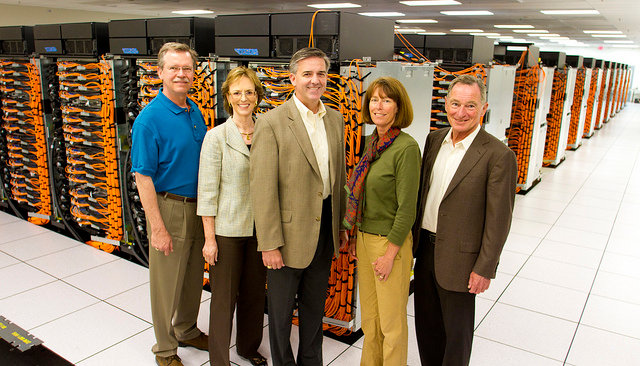
Some racks of the IBM Sequoia supercomputer

The Sequoia supercomputer, which uses Linux as its operating system, is based on the Blue Gene/Q architecture, the latest version of the architecture developed by IBM exactly to build supercomputers. Sequoia uses Power BQC processors with 16 cores clocked at 1.6 GHz stacked in 96 racks. The total number of cores is 1,572,864 for a total computing capacity of 16,324.8 TeraFlops. It has 1,572,864 GBytes (nearly 1.6 PetaBytes) of memory.


Google's Project Glass augmented reality glasses (photo courtesy of Google. Unauthorized use is not permitted)

Yesterday, Google announced Project Glass, which has the purpose of creating glasses that can provide an augmented reality. These glasses, at least in the prototype shown by Google, are composed of a frame similar to the one of ordinary glasses with a display near the right eye. An operating system sends real-time various information to the users depending on what they’re doing.

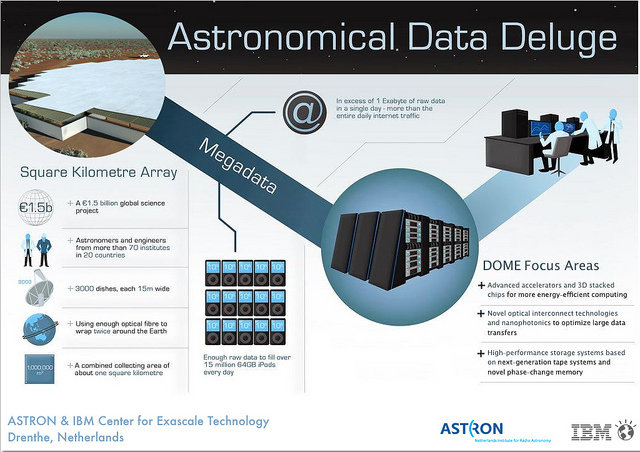
Infographics showing how the DOME collaboration will work (Image courtesy of International Business Machines Corporation. Unauthorized use is not permitted)

IBM and ASTRON (ASTRonomisch Onderzoek in Nederland, the Netherlands Institute for Radio Astronomy) announced an agreement for a collaboration that will lead to the construction of a new supercomputer for the collection of data from the SKA (Square Kilometre Array), the consortium that aims to build a radio telescope consisting of the largest array of the world. ASTRON allocated an initial sum of 32.9 million Euros for a five years collaboration.

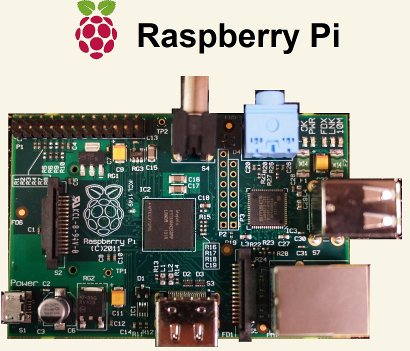
The micro-computer Raspberry Pi

The Raspberry Pi is a tiny computer the size of a credit card. That’s a project started about six years ago that has now finally seen the light. Yesterday its sales started and the success has been incredible, so much that the available computers were sold very quickly. The official project website was taken down because of the excessive traffic and the sites of its partners who resell the Raspberry Pi suffered high traffic problems.

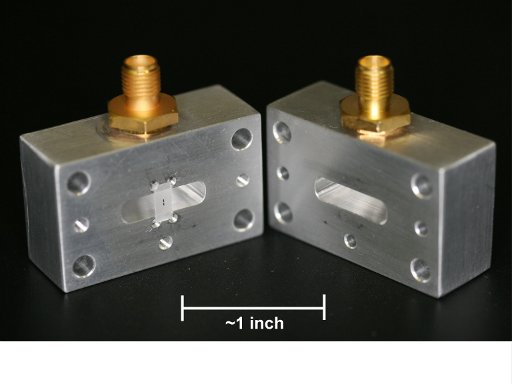
3D superconducting qubit device suspended in the center of the cavity on a small Sapphire chip (Image courtesy of International Business Machines Corporation. Unauthorized use not permitted)

The team at IBM Research made very important progress in reducing the error in elementary computations and in maintaining the integrity of the quantum properties of qubits. A key element in the production of superconducting qubit was to use manufacturing techniques developed for the production with silicon currently in use.