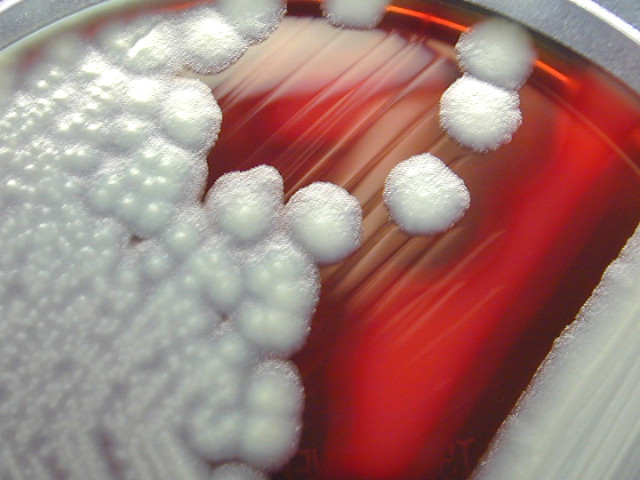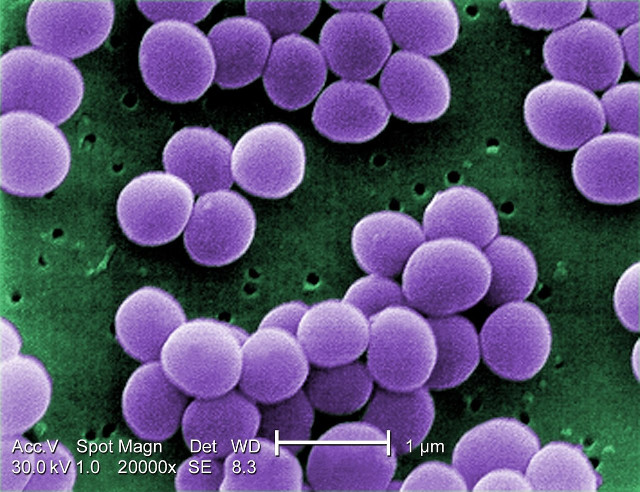
An article published in the journal “mSystems” describes a research on the adaptations of bacteria of the species Bacillus cereus and Staphylococcus aureus found on the International Space Station. A team of researchers led by Erica Hartmann of Northwestern University compared 189 genomes isolated from various origins to understand the influence of what are called built environments, human products that modify the natural environment. In the Station’s case, it’s an extreme environment and yet no dangerous mutations were detected such as resistance to antibiotics but they developed adaptations to difficult conditions.
Understanding the mechanisms of adaptation of microorganisms to built environments is essential to address potential health risks. The International Space Station is a unique environment but cities and even the agricultural areas where everything is regulated by human activities are built environments in which microorganisms are in conditions that are different from those in which they normally live, with consequences that may be negative for humans in case they develop or increase pathogenic elements or antibiotic resistance.
Dr. Erica Hartmann explained that there has been much speculation about the effects that microgravity conditions with high levels of radiation and limited air circulation could have on living organisms, including bacteria. The International Space Station crew members are kept under strict medical supervision before, during and after their missions, there are various experiments concerning mice but the adaptations of bacteria are still little known. If some project of manned missions in deep space or even on Mars will be realized, we must take into account the presence of bacteria.
Obtaining a completely sterile environment on the International Space Station is absolutely impossible, if only because the human body is full of microorganisms, to the point that we don’t even know exactly how many of them it contains. There are species that can survive outside the human body so in the case of long journeys into space it’s not clear how they could change. For this reason, Dr. Erica Hartmann’s team compared 189 genomes of bacteria of the species Bacillus cereus and Staphylococcus aureus, linked to some potential health problems, to understand the differences between the specimens taken on the Station, others coming from built environments on Earth, from natural soil and human bodies.
Genomic analyzes showed that the bacteria on the International Space Station adapted to difficult conditions to survive but without developing characteristics harmful for the crew. A strain of Staphylococcus aureus developed antibiotic resistance but not the one that adapted to the Station.
This is good news for the International Space Station crew, but the researchers are cautious about what may happen in the future. There are various projects about space tourism, with possible consequences. For now those are short sub-orbital flights and to have space hotels it will still take us who knows how many years but more and more people will enter into built environments that are rather stressful for the bacteria that will be brought by humans.
Regarding potential problems, Dr. Erica Hartmann pointed out that astronauts are very healthy but tourists will not be at the same level and compared the future situation to that of today’s airplanes, where a person who coughs can infect other passengers. Basically, these are problems that will must be addressed with follow-up research to find solutions that, as often happens, start from problems related to space travel are then applied to everyday life.