2016

The Olive Trees by Vincent Van Gogh

Yesterday in Paris a book containing 65 sketches attributed to Vincent Van Gogh titled “Vincent Van Gogh, the brouillard d’Arles, retrouvé carnet” (Vincent Van Gogh, the fog of Arlet, sketchbook found) was presented. It would be a sensational discovery and as such was promoted except that the Van Gogh Museum in Amsterdam responded to the presentation by stating that the sketches are fakes.

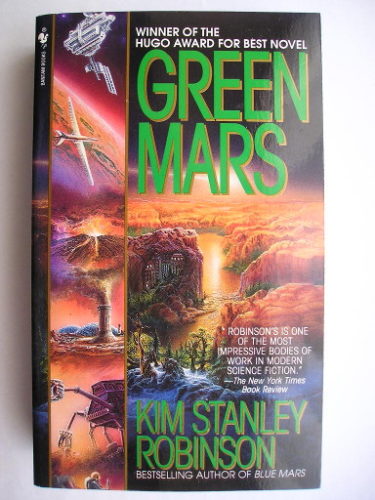
Green Mars by Kim Stanley Robinson

The novel “Green Mars” by Kim Stanley Robinson was published for the first time in 1994. It won the Hugo and Locus Awards. It’s the second novel in the Mars trilogy and follows “Red Mars”.

In the decades after the 2061 revolution on Mars terraforming operations continue and more and more colonists arrive. The ideas about the future of the planet keep on being different among the surviving First Hundred and even more so with Earth’s interests aimed at the exploitation of local resources.

New generations of real Martians are raised, some of them in hiding like Nirgal’s belongs, which becomes increasingly important. Gradually Mars changes as tensions among various factions increase: the result will determine the future of the planet, which is not so red anymore.

At the Watson Developer Conference held in San Francisco, IBM announced Project Intu, a new platform designed to make its Watson cognitive computing system accessible from any device. Launched for now in an experimental version, it gives developers who have a Bluemix account to have access to Watson Intu Gateway and create applications using Watson using the SDKs provided as free software through Watson Developer Cloud, Intu Gateway and GitHub.

An article published in the journal “PLOS Genetics” describes a research on the genes existing in non-African modern humans inherited from Neanderthals. According to a team of researchers led by Ivan Juric of University of California at Davis only a small amount of Neanderthal genes have remained in the DNA of modern humans because natural selection removed a lot of deleterious variants.

The region where Kaikaifilu hervei was found, its reconstruction and the area where the expedition worked (Image courtesy University of Chile)

An article published in the journal “Cretaceous Research” describes the discovery of a new species of mosasaur, a family of marine reptiles that lived in the Late Cretaceous. Called Kaikaifilu hervei, the animal found was probably long between 12 and 14 meters (39 to 46 feet). The fossils were found in 2010 by a Chilean expedition to Seymour Island in the Antarctic Peninsula in rocks dating back about 66 million years ago.