March 2019

A technology created for particle physics is now used in the art field

A technology developed by CERN to create detectors capable of counting and tracking particles also used by ESA in space missions found a very different application in the art field. InsightART, a company opened in Prague, in the Czech Republic, in ESA’s Business Incubation Center (BIC), adapted a chip based on that technology called Timepix to a device to find fake artworks and incorrectly attributed.

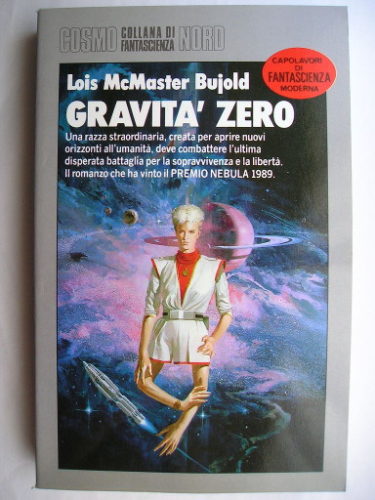
Falling free by Lois McMaster Bujold (Italian edition)

The novel “Falling free” by Lois McMaster Bujold was published for the first time in 1988. It won the Nebula Award as the best novel of the year.

Leo Graf is an engineer who takes care of quality control in space habitats. Working for GalacTech, a very important space corporation, on their Cay Habitat is instructed to train a group of Quaddies, the product of genetic engineering applied to human beings to make them suitable to live and work in microgravity conditions.

The Quaddies have no legal protection, in fact they’re GalacTech’s property because legally they’re the product of their biological experiment. For Leo Graf it’s not easy to work in that situation and he’s very disturbed by the idea that the Quaddies are considered a product to be used and sold to other space habitats. The situation becomes even more serious when the news arrives of the invention of an artificial gravity generator, a technology that will make the Quaddies obsolete as a work force in space habitats.

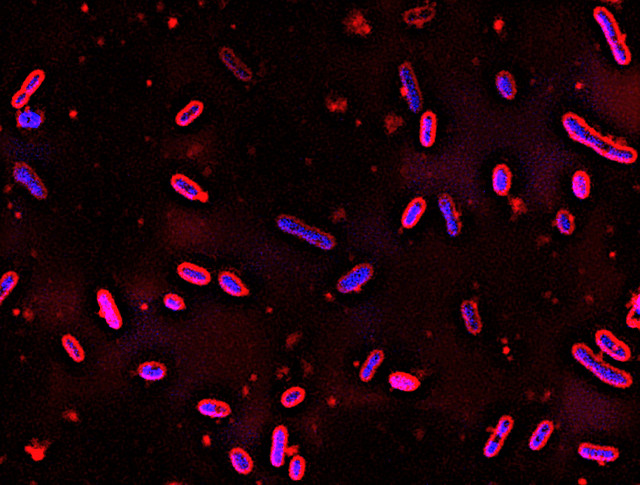
Novosphingobium aromaticivorans (Image GLBRC)

An article published in the journal “Green Chemistry” describes the possibility of using bacteria of the species Novosphingobium aromaticivorans to produce a plastic material starting from wood processing waste following some genetic modifications. A team of researchers worked on this bacterium, which in nature can already digest many parts of lignin, improving its ability to produce a substance known as PDC on which bioplastic materials are already based upon but with production difficulties that could be overcome using these bacteria.

Spock (Ethan Peck) and Michael Burnham (Sonequa Martin-Green) in If Memory Serves (Image courtesy CBS / Netflix. All rights reserved)

“If Memory Serves” is the 8th episode of the 2nd season of the TV show “Star Trek: Discovery” and follows “Light and Shadows”.

While the USS Discovery is still investigating the space rift near the planet Kaminar, Michael Burnham (Sonequa Martin-Green) takes Spock (Ethan Peck) to the planet Talos IV, where the natives help them to clarify the memories connected to the Red Angel.

Good Omens by Terry Pratchett and Neil Gaiman

The novel “Good Omens” by Terry Pratchett and Neil Gaiman was published for the first time in 1990.

Aziraphale is an angel while Crowley is a demon, although they’re part of the opposite factions among them a sincere friendship developed and both of them enjoy their life on Earth, where they have lived for millennia. For this reason the Apocalypse is really a nuisance for them and, despite the fact that it was carefully planned since the Creation, the two them are looking for a loophole to avoid it.

The Antichrist is about to reach the age when he will start manifesting his powers and the only hope for Aziraphale and Crowley is that he grows in a way that never leads him to perform the acts needed to start the end of the world. The plan could work despite the signs of the impending Apocalypse if the child the two are trying to influence was indeed the Antichrist.