2019

Neural networks to predict the mass of planets in formation

An article published in the journal “Astronomy and Astrophysics” shows an example of the use of a neural network and a deep learning algorithm to reduce the time to create simulations of star systems formation obtaining even better results. Yann Alibert of NCCR PlanetS and of the Swiss University of Bern and Julia Venturini of the International Space Science Institute (ISSI) of Bern and a PlanetS collaborator developed this new system that predicts the mass of a planet starting from the conditions in which it formed with a excellent accuracy and a much higher speed than models based on differential equations.

Michael Burnham (Sonequa Martin-Green) and Spock (Ethan Peck) in Project Daedalus (Image courtesy CBS / Netflix. All rights reserved)

“Project Daedalus” is the 9th episode of the 2nd season of the TV show “Star Trek: Discovery” and follows “If Memory Serves”.

Admiral Katrina Cornwell (Jayne Brook) joins the USS Discovery to question Spock (Ethan Peck) and shows Captain Christopher Pike (Anson Mount) the footage in which Spock kills some staff members of the psychiatric hospital where he spent some time. To shed light on the situation, the only solution is to go to Section 31’s headquarters.

A technology created for particle physics is now used in the art field

A technology developed by CERN to create detectors capable of counting and tracking particles also used by ESA in space missions found a very different application in the art field. InsightART, a company opened in Prague, in the Czech Republic, in ESA’s Business Incubation Center (BIC), adapted a chip based on that technology called Timepix to a device to find fake artworks and incorrectly attributed.

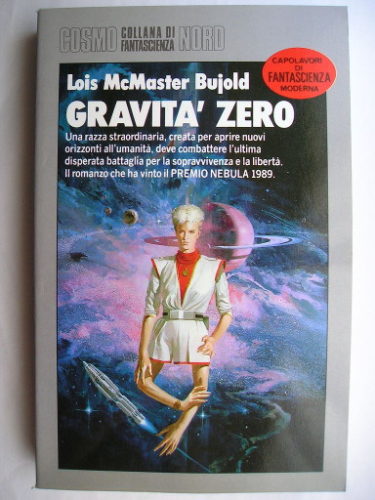
Falling free by Lois McMaster Bujold (Italian edition)

The novel “Falling free” by Lois McMaster Bujold was published for the first time in 1988. It won the Nebula Award as the best novel of the year.

Leo Graf is an engineer who takes care of quality control in space habitats. Working for GalacTech, a very important space corporation, on their Cay Habitat is instructed to train a group of Quaddies, the product of genetic engineering applied to human beings to make them suitable to live and work in microgravity conditions.

The Quaddies have no legal protection, in fact they’re GalacTech’s property because legally they’re the product of their biological experiment. For Leo Graf it’s not easy to work in that situation and he’s very disturbed by the idea that the Quaddies are considered a product to be used and sold to other space habitats. The situation becomes even more serious when the news arrives of the invention of an artificial gravity generator, a technology that will make the Quaddies obsolete as a work force in space habitats.

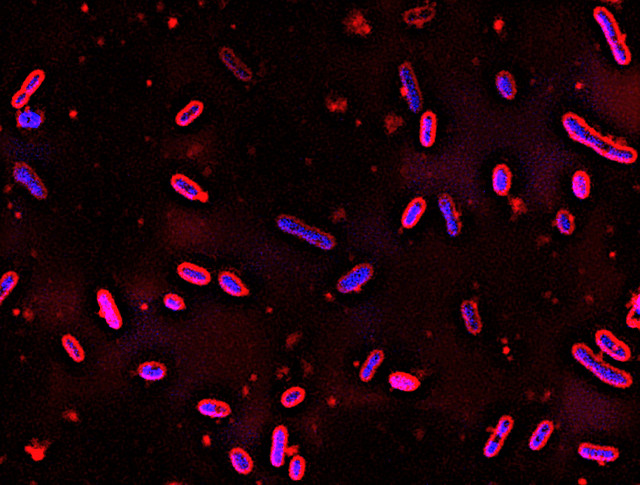
Novosphingobium aromaticivorans (Image GLBRC)

An article published in the journal “Green Chemistry” describes the possibility of using bacteria of the species Novosphingobium aromaticivorans to produce a plastic material starting from wood processing waste following some genetic modifications. A team of researchers worked on this bacterium, which in nature can already digest many parts of lignin, improving its ability to produce a substance known as PDC on which bioplastic materials are already based upon but with production difficulties that could be overcome using these bacteria.