Paleontology

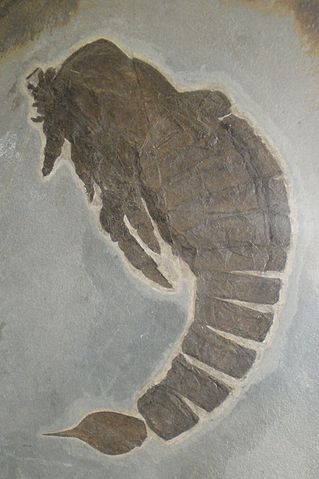
Tokummia katalepsis fossil (Photo courtesy Aria / Jean-Bernard Caron)

An article published in the journal “Nature” describes the discovery of fossils of a species of marine arthropods that lived a little more than 500 million years ago in the Permian period. Calling Tokummia Katalepsis, this species is one of the many discovered in Burgess Shale and is important because according to Cédric Ariz and Jean-Bernard Caron of the Royal Ontario Museum (ROM) it shows the origin of mandibulates (Mandibulata), a group of arthropods that includes millipedes, crustaceans and insects.

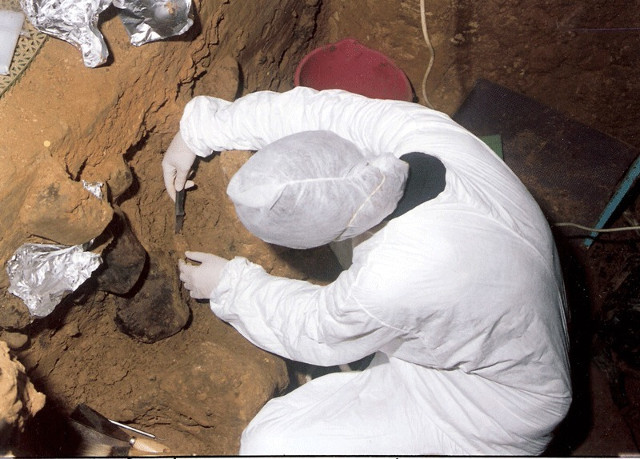
Sample-taking at the archeological site of El Sidrón, Spain (Photo courtesy El Sidrón research team)

An article published in the journal “Science” describes a new method to collect DNA from sediments in archaeological sites, even when there are no bone remains. A team of researchers from the Max Planck Institute for Evolutionary Anthropology in Leipzig, Germany, successfully experimented with this method in sites of various nations, recovering DNA from various mammals including hominids, specifically Neanderthals and the mysterious Denisovans.

Reproduction of Homo floresiensis Specimen

An article published in the magazine “Journal of Human Evolution” describes a study on the bones of Homo floresiensis (photo ©Mamoritai), the hominids nicknamed hobbits discovered on the Indonesian island of Flores in 2003. A team led by the Australian National University (ANU) concluded that it was probably a sister species of Homo habilis, that there was no evidence that it evolved from Homo erectus and that it’s almost impossible for it to be Homo sapiens suffering from malformation.

Slimonia acuminata fossil

An article published in the journal “The American Naturalist” describes a research on Slimonia acuminata, a species of sea scorpion that lived about 430 million years ago. According to Scott Persons and John Acorn, two scientists from the University of Alberta, this very ancient predator that could reach a length of about 40 centimeters (almost 16″) used its tail as a weapon to hit its prey.

Teleocrater rhadinus reconstruction (Image by Gabriel Lio, and courtesy of Museo Argentino de Ciencias Naturales "Bernardino Rivadavia" in Buenos Aires)

An article published in the journal “Nature” describes a research about Teleocrater rhadinus, a carnivorous reptile that lived in the Triassic period, about 245 million years ago. A team led by Sterling Nesbitt of Virginia Tech studied specimens of this ancient cousin of the dinosaurs found in 2015 noting its similarities to crocodiles. However, this species and its other close relatives are the oldest of the group that originated dinosaurs and birds and this could greatly change the ideas about the early stages of their evolution.