
Space probes


Jets of organic materials from Saturn moon Enceladus
On March 27, 2012, the Cassini space proble passed at a height of just 74 km (46 miles) from the south pole of Enceladus. In this way, the probe has been able to use its Ion and Neutral Mass Spectrometer (INMS) and its Plasma Spectrometer (CAPS) to analyze the particles of the jets coming from this satellite. It was found that these jets contain organic materials and salts with a salinity level very similar to the Earth’s oceans.

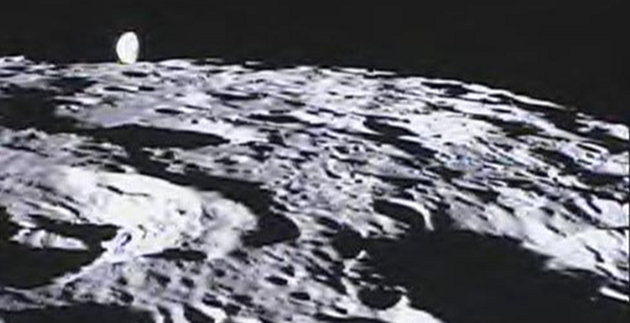
The first pictures of the Moon taken by the GRAIL spacecraft
NASA started publishing photos of the Moon taken by the MoonKam (Moon Knowledge Acquired by Middle school students) of Ebb and Flow, the GRAIL (Gravity Recovery and Interior Laboratory) spacecraft. To be precise, between March 15 and 17, Ebb took pictures of the area selected by the fourth grade students from the Emily Dickinson Elementary School, Bozeman, Montana, who won the contest to name the two spacecraft.


NASA releases a new infrared sky map


A huge dust devil on Mars
The Mars Reconnaissance Orbiter (MRO) is a NASA space probe designed to explore Mars from its orbit together with other probes and the Mars Rovers. On February 16, 2012 one of the instruments of the Mars Reconnaissance Orbiter, a huge camera called the High Resolution Imaging Science Experiment (HiRISE), captured images of a dust devil in the region called Amazonis Planitia, a large plain in the northern hemisphere of Mars.
