
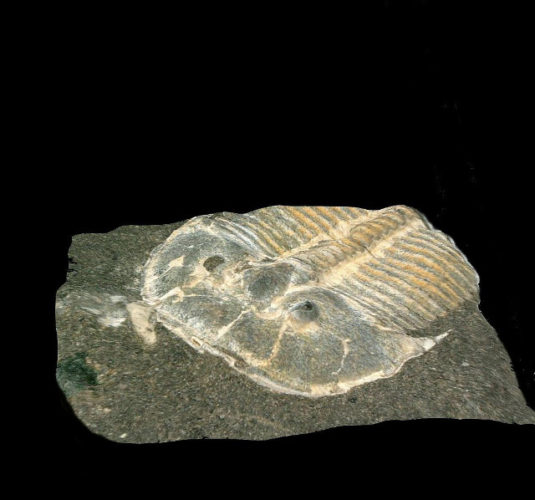
A 429-million-year-old trilobite fossil offers new insight into compound eyes
An article published in the journal “Scientific Reports” reports a study on the eyes of a fossil of Aulacopleura kionickii, a species of trilobite that lived about 429 million years ago, which offers evidence that it had a vision comparable to that of its distant modern cousins, insects but also crustaceans. Dr. Brigitte Schoenemann of the University of Cologne, Germany, and Euan Clarkson of the University of Edinburgh, Scotland, examined fossil eyes using digital microscopy to find in those compound eyes structures similar to those that exist today in bees, dragonflies, and many crustaceans with diurnal habits.
