

Warning: This review contains spoilers for the first season of the TV show “Dune: Prophecy”!
On December 22, the first season of the TV show “Dune: Prophecy” ended.
Years after the death of Frank Herbert, the author of the original Dune novels, his son Brian and Kevin J. Anderson started writing stories, generally in mini-series of two or three novels, set in the same fictional universe. I read several of them but frankly, at a certain point, I got bored because the level seemed to me to be that of fanfiction that lacked all the nuances that were a great strength of the original works.
“Dune: Prophecy” is set several decades after the end of the Butlerian jihad. The titles indicate a connection with the novel “Sisterhood of Dune” but the show is set after those events, in a period in which the Imperium is still seeking stability.
The main cast of the first season of “Dune: Prophecy” consists of:
- Emily Watson (photo ©Elena Ternovaja) as Valya Harkonnen
- Jessica Barden as young Valya Harkonnen
- Olivia Williams as Tula Harkonnen
- Emma Canning as young Tula Harkonnen
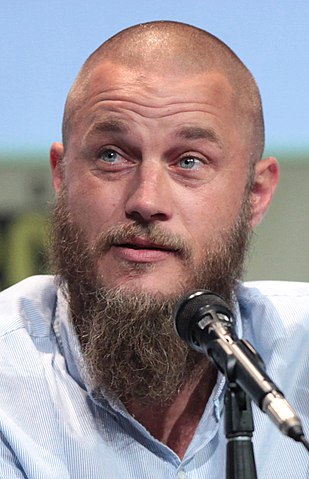
- Travis Fimmel (photo ©Gage Skidmore) as Desmond Hart
- Jodhi May as Empress Natalya
- Sarah-Sofie Boussnina as Princess Ynez
- Chloe Lea as Sister Lila
- Jade Anouka as Sister Theodosia
- Chris Mason as Keiran Atreides
- Shalom Brune-Franklin as Mikaela
- Mark Strong as Emperor Javicco Corrino
- Edward Davis as Harrow Harkonnen
- Josh Heuston as Constantine Corrino
The show includes many references to the events told in the novel “The Battle of Corrin” but it seems that there’s a desire to avoid the term jihad. The characters refer in generic terms to the war against thinking machines and the subsequent ban on the use of technologies that have characteristics even remotely similar to them.
The Butlerian jihad is told in the “Legends of Dune” trilogy and is the title of its first book but it’s possible that the producers of “Dune: Prophecy” felt that the term has negative connotations among Western viewers. This suspicion already came up with Denis Villeneuve’s movies. It seems a choice that aims to get a better response from viewers who are not fans of the saga.
The show starts with the mysterious Desmond Hart, who returned from Arrakis and uses an unknown power to convince the Emperor to side against the Bene Gesserit. The Sisterhood founded by Raquella Berto-Anirul, a character introduced in the novel “The Battle of Corrin”, is expanding and trying to forge strong bonds with the Emperor and the Great Houses.
Overall, the story seemed good to me even if some parts left me perplexed.
The Voice is one of the Bene Gesserit powers but it seems that it was born as a natural talent of Valya Harkonnen well before joining the Sisterhood. However, this would suggest some particular physical characteristic, perhaps resulting from a genetic mutation. It’s difficult to think that it’s a type of sill that can be taught and I hope some explanation will be provided.
The flashbacks regarding the Harkonnen sisters also concern the feud between the Harkonnens and the Atreides. In an important moment, there’s a hunting party in which the characters use curiously primitive means even by the standards of the post-Butlerian jihad. It would seem that they’re all Atreides but there are many of them thinking that they must be Vorian Atreides’s children or grandchildren.
Finally, when the truth about Desmond Hart’s origins came out, I had the feeling of watching “Grey’s Anatomy” or some soap opera thinking about the subsequent seduction scenes. Frankly, it seems to me a confirmation of the fact that this show is produced mainly for a general audience.
Thinking about Tula’s past with the Atreides, I would have put more emphasis on the relationship between her and Sister Lila, since she’s also a descendant of Vorian Atreides. That’s because an important element of her personal story is given by the fact that she’s a descendant of Raquella Berto-Anirul, introduced in the novels as Vorian Atreides’s granddaughter.
I must say that the characters determined my liking for the show. In the books by Brian Herbert and Kevin J. Anderson I read, characterization is rough. In the show, the situation is a little better, perhaps also thanks to the screenwriters. I felt like the actors did their best to bring the characters to life and I thought the results were good thanks to them.
“Dune: Prophecy” was renewed for a second season. Maybe the budget will also increase: I don’t look at special effects to judge a TV show but the court of the emperor of the universe seemed rather bare for a show made today.
Six episodes were really too little to wrap up all the parts of the plot, leaving me with the impression that this introductory season was a sort of prologue. In fact, the season finale is the one that showed more substance than all the others put together with key events that will have subsequent developments.
The events include both developments of the various intrigues in progress by the factions at work and revelations and even connections with the original saga. The potential of the union of the Atreides/Harkonnen lineages, various references to Sister Theodosia’s past that gave way to the revelation of her nature, and the importance of conquering fear that seems like a basis for the creation of the litany against fear. For me, it’s still too little to fully appreciate these prequels but I consider the sands of Arrakis as home as well, so I’ll stick at least with this TV adaptation.
