
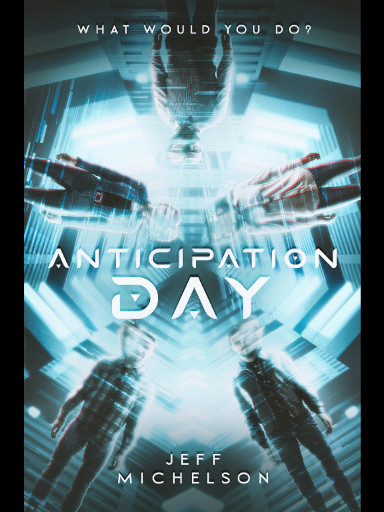
The novel “Anticipation Day” by Jeff Michelson was published for the first time in 2024.
2026. Dr. Joshua Lee presents a new technology capable of generating an absolutely realistic simulation in the human mind thanks to the connection with a quantum computer system. The USA administration decides to support the project not only to offer a pastime but also as a way to improve people’s lives.
2031. A group of friends gather for a dinner that is truly special because everyone will have the opportunity to experience a simulation created according to their requests. Each of them will be well aware of the fact that these aren’t real experiences, but their perceptions will be completely realistic. This will force them to reflect on their lives and their choices, with consequences of various kinds.
“Anticipation Day” offers us a near future in which a non-invasive technology capable of interfacing humans and computers becomes available and is used as a sort of therapy. Having an experience of your own choosing that lasts a few hours but subjectively can last up to a year offers many possibilities that range from reliving an important period of your life to making your dream come true.
The technology developed to create these simulations is decidedly science fiction. Despite the continuous progress of quantum computers and research on human-computer interfaces, the timescale indicated in the novel seems very optimistic.
Jeff Michelson doesn’t go into detail about how the technology at the center of the novel works because he’s interested in developing the consequences of its use on the characters. For this reason, it makes sense that he set the novel only a few years in the future, making the stories of the protagonists completely familiar to readers. This makes it perfect even for those who don’t normally read science fiction.
This novel seems decidedly unsuitable for readers looking for action, even if many events are told, especially those perceived in the simulations. This is because at the center of everything are the protagonists’ reactions to the events they experience, however simulated. Their stories are told from their points of view, and this includes continuous considerations and reflections of various types on what’s happening.
The part of the novel where the friends meet to discuss their expectations regarding their simulations is made up almost entirely of conversations. They help the reader get to know the protagonists so that they can better understand their choices and reactions during the simulations.
The various protagonists make diverse choices regarding the simulations they decide to live. Those are choices determined by very personal motivations, linked to past experiences or their dreams, or a combination of both factors. Those are choices that lead in different ways to reflections on their lives. From within a simulated environment, they see themselves and their real lives from a different point of view, which isn’t necessarily what they want but perhaps what they need.
For the participants, the emotional consequences of their experiences are real and not always what they hoped for. They’re followed by doctors and psychologists with the aim of avoiding negative consequences. However, a completely realistic experience can have a remarkable intensity even when the person doing it is aware that it’s a simulation. The fact that a simulation was chosen because it’s in some way important contributes to that intensity.
After offering an introduction to simulation technology and recounting the experiences of some people who tried it, “Anticipation Day” reaches an open ending. Jeff Michelson has ample space to delve into the developments connected to the use of this technology and its consequences, including those at the social and political levels. This novel can still work as a stand-alone story, and I recommend it to readers interested in this type of reflection and introspection, regardless of the genre label. It’s available on Amazon USA, UK, and Canada.
