Biology

A refinement of the CRISPR-Cas genetic technique allows to work on many genes simultaneously

An article published in the journal “Nature Methods” reports the results of the experimentation of a variant of the CRISPR-Cas genetic technique, in recent years used a lot in some variants for genetic manipulations of different types. A team of researchers at ETH Zurich, Switzerland, used the Cas12a enzyme to achieve a significant step forward in this type of technique because it enables to intervene on up to 25 genetic sites simultaneously.

Komodo dragon (Photo Midori)

An article published in the journal “Nature Ecology & Evolution” reports a complete genome sequencing of the Komodo dragon, the largest lizard existing today. A collaboration between the Gladstone Institutes, the University of California, San Francisco and the Atlanta Zoo that includes researchers from the Universities of Florence and Padua, Italy, led to the sequencing of the DNA of the species classified as Varanus komodoensis using various technologies to obtain a high quality result. This made it possible to compare that genome with that of other reptiles to understand how it has become a lethal predator with unique physiological and metabolic characteristics among reptiles.

The study of bacteria offers new clues to the evolution of photosynthesis

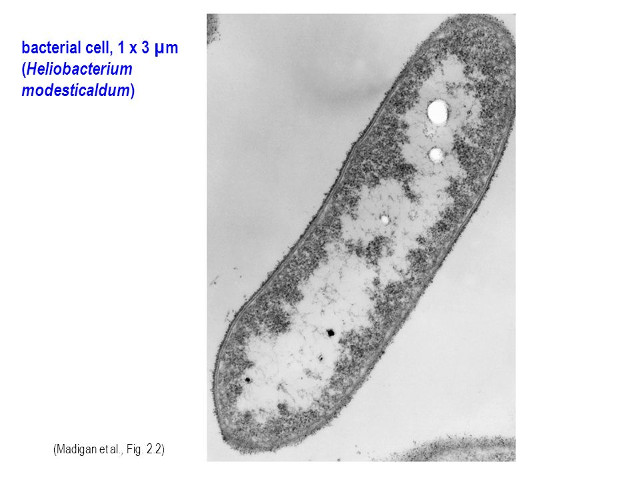
An article published in the journal “Trends in Plant Science” reports a deveolpment of a theory on the evolution of photosynthesis. Tanai Cardona and A. William Rutherford of Imperial College London studied various bacteria belonging to species capable of photosynthesis. Their conclusion is that the photosynthesis we know today thanks to plants was possible much earlier than previously thought and wasn’t an evolution of another form that is generally considered more primitive and doesn’t lead to the release of oxygen.

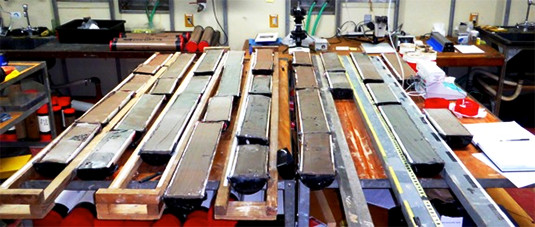
Charles Paradis with a soil core sample (Photo courtesy Lance E. King/Y-12 National Security Complex. All rights reserved)

An article published in the journal “Nature Communications” reports the first use of a technique called BONCAT+FACS to isolate the active microbes present in a soil sample. A team of scientists led by the Lawrence Berkeley National Laboratory (Berkeley Lab) adapted a technique developed to isolate proteins produced in cells to transform it into a tool that could identify single active microbes. This will help to understand in new details parts of ecosystems difficult to investigate, also obtaining information on large-scale cycles existing in the environment.

An abundance of Archaea in sediments beneath the ocean floor

An article published in the journal “Science Advances” reports an abundance of ammonia-oxidizing archaea in microbial communities in sediments beneath the seafloor of the North Atlantic Ocean. A team of researchers led by William Orsi of the Ludwig-Maximilians-Universitaet (LMU) in Munich, Germany, discovered that archaea not only survived for millions of years in sediments that can reach over two kilometers below the ocean floor but adapted to those conditions better than bacteria and could play an important role in the geochemical cycles of carbon and nitrogen in that ecosystem.