Biology

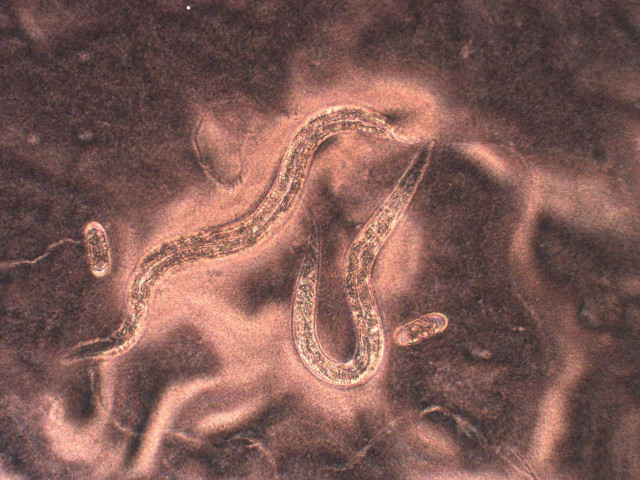
Halicephalobus mephisto (Image courtesy John Bracht, American University)

An article published in the journal “Nature Communications” reports the DNA sequencing of a nematode nicknamed “Devil Worm” whose scientific name is Halicephalobus mephisto. A team of researchers led by Dr. John Bracht of the American University sequenced the DNA of this worm only half a millimeter long to try to understand the genetic reasons behind its ability to live even at over 3 kilometers deep underground in warm water veins, where there’s little oxygen and a large amount of methane. An article published in the “Journal of Molecular Evolution” reports the examination of some genes that this nematode has in common with some molluscs adapted to live in warm environments.

Hydrothermal vent in the Urashima site (Photo courtesy Submarine Ring of Fire 2014 - Ironman, NSF/NOAA, Jason, Copyright WHOI)

An article published in the journal “Nature Ecology & Evolution” reports the creation of protocells in warm and alkaline salt water that replicate the conditions of the hydrothermal vents existing in deep seas. A team of researchers led by University College London (UCL) took a step forward in research into the origin of life on Earth by bringing new clues that hydrothermal vents are the place where the first life forms emerged. In fact, they proved the possible formation of protocells starting from compounds existing in that environment and in those environmental conditions.

According to a genetic research, humanity's birthplace is in today's Botswana

An article published in the journal “Nature” reports the results of an analysis of modern humans’ mitochondrial DNA to reconstruct the Homo sapiens family tree. A team of researchers led by Eva Chan of the Genomics and Epigenetics Division of the Garvan Institute of Medical Research and the University of New South Wales made a complex genetic analysis concluding that the modern human species emerged about 200,000 years ago in today’s Botswana, near the Zambezi River.

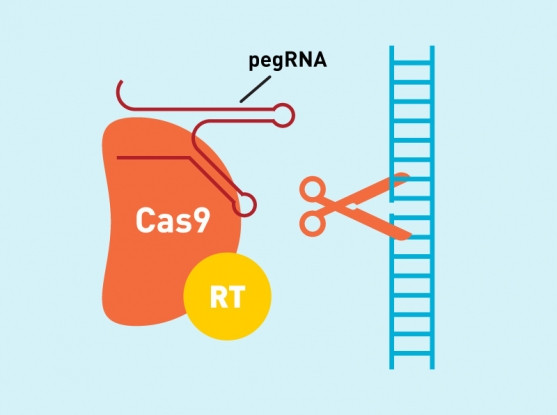
Prime editing scheme (Image courtesy Broad Institute)

An article published in the journal “Nature” describes a new variant of the CRISPR-Cas9 genetic technique capable of obtaining more targeted modifications by inserting, eliminating and modifying pieces of DNA. A team from the Broad Institute of MIT and Harvard combined the CRISPR-Cas9 technique as it is currently used with a reverse transcriptase, in simple words an enzyme that can transcribe RNA into DNA. The result is what David Liu, one of the senior authors of the research, defined a greater flexibility in the target choice and greater precision in the modifications.

Piranhas simultaneously replace all the teeth on one side of their mouth

An article published in the journal “Evolution & Development” reports a research on the replacement of teeth in piranhas, the famous carnivorous fish that live in South America’s rivers and lagoons. They, like other species of the Serrasalmidae family commonly known as pacus which are omnivorous, simultaneously replace all the teeth on one side on their mouth. It was a known mechanism but only now it’s been observed and therefore proven.