Biology

The island of Flores today and in the past

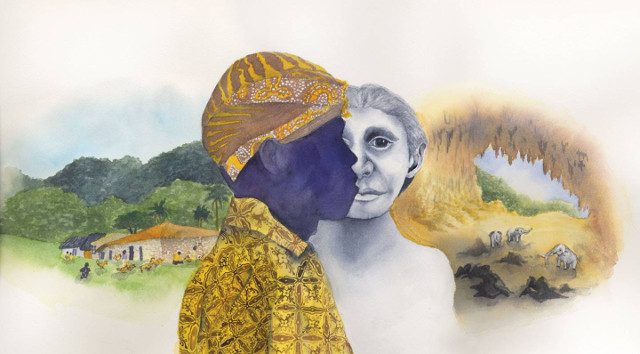
An article published in the journal “Science” describes a genetic analysis of members of the pygmy population living on the Indonesian island of Flores. A team of researchers tried to understand the origins of their short stature and the possible relationship with Homo floresiensis, the hominins nicknamed Hobbits who lived on the island in the past, concluding that there are no traces of genetic links between the two populations, in which short stature is independent, a typical case of adaptation to life on an island.

Phaeodaria examples (Image courtesy Mike Stukel. All rights reserved)

An article published in the journal “Limnology and Oceanography” describes a study on the circulation of carbon in the oceans. A team of researchers from Florida State University (FSU) studied the area between 100 and 1,000 meters of depth discovering that very simple organisms belonging to the group called Phaeodarea consume carbon-rich particles that are sinking before they reach the seabed, where they could otherwise be sequestered for millennia. They’re tiny organisms but they could have an impact on the carbon cycle and therefore on climate.

BovB

An article published in the journal “Genome Biology” describes a research on some transposons, commonly called jumping genes because they can move within the DNA of an organism, typically leaving copies of themselves in the original location. A team of researchers looked for traces of two transposons, identified as L1 and BovB, in 759 species of plants, animals and fungi. Their theory is that they have become parts of mammalian DNA through a horizontal gene transfer, which means acquiring them from another species.

Skull of a Hòabìnhian individual (Photo courtesy Fabio Lahr. All rights reserved)

An article published in the journal “Science” describes the results of a genetic research on the populations of Southeast Asia. A team of researchers sequenced the DNA of 26 human beings that lived up to 8,000 years ago in various parts of that area and subsequent analysis led them to conclude that today’s populations descended from at least four ancient populations. This expands a research published in May, again in “Science”, which found three migrations, and contradicts at least two of the theories that have been discussed during the last century.

Views of a Dolichogenidea xenomorph specimen (Image courtesy Erinn Fagan-Jeffries. All rights reserved)

An article published in the “Journal of Hymenoptera Research” describes the discovery of some new species of parasitoid wasps endowed with particularly long ovipositors. The most interesting one was named Dolichogenidea xenomorph, a name suggested by the really gruesome life cycle in which its needle-shaped ovipositor is used to inject its eggs into a host and then its larvae devour it from the inside until they burst out of its body, like the xenomorph seen in the movie “Alien” and its sequels.