
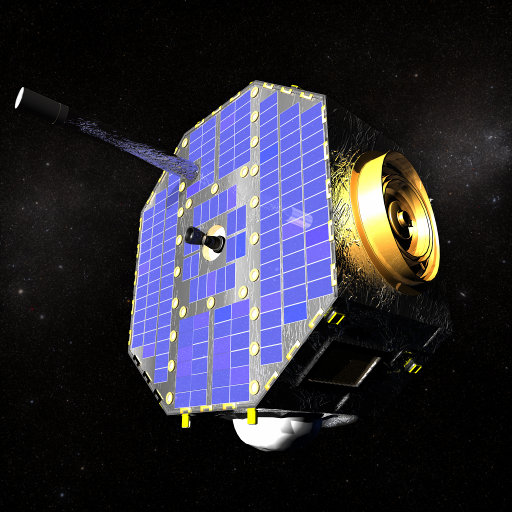
NASA spacecraft Interstellar Boundary Explorer (IBEX) has been studying interstellar matter since October 2008, when it was launched into orbit, revealing the differences with the matter within the solar system. IBEX observations focused on the atoms of hydrogen, oxygen, neon and helium, which make up interstellar matter.
A kind of magnetic bubble surrounds the solar system, created by the flow of particles emitted by the Sun. This solar wind reaches the boundaries of that bubble, where it collides with the interstellar matter which makes up a sort of breeze created by the fact that the solar system moves within the galaxy.
Dangerous cosmic radiation are stopped by the magnetic field of the solar wind due to its electromagnetic charge but about half of the interstellar particles are neutral from an electromagnetic point of view, therefore they can penetrate into the solar system.
Inevitably, some of this interstellar matter reaches the Earth and the IBEX spacecraft is in orbit ready to detect them. The different types of atoms are deflected by the solar gravity in different ways depending on their mass so their trajectories can be calculated and IBEX knows where to find them. Now the interesting results of the analysis of interstellar matter that reached the Earth have been revealed.
The main result is that the distribution of the elements in the solar system doesn’t match the interstellar material analyzed. In particular, the interstellar wind contains a lower oxygen / neon ratio: the ratio is 74 oxygen atoms for every 20 neon atoms while in the solar system this ratio is of 111 oxygen atoms for every 20 neon atoms.
[ad name=”AmazonDocumentary”]
There are two possible explanations for this difference. The first possibility is that our solar system was born in another region of the galaxy which was richer in oxygen and in the course of time it moved to the area that is going through now. The second possibility is that oxygen is actually present in this region of the Milky Way but that part of its atoms are combined in interstellar dust and ice that cann’t enter the solar system.
The IBEX spacecraft has also calculated the speed at which neutral particles enter the solar system, which is about 83,000 km/h (52,000 miles per hour), about 11,000 km/h (7,000 miles per hour) slower than observations made years ago by the space probe Ulysses. The direction from which the interstellar breeze arrives is also different from the one detected by the Ulysses spacecraft.
These measurements give us an idea about the cloud of material in which the solar system is now passing, called the local interstellar cloud. It’s estimated that it entered that cloud in the last 45,000 years and one day it will get out.
By analyzing the information of the IBEX spacecraft, we can get a better idea not only of what lies beyond the solar system but also about what can go on inside it. In fact, the structure of the bubble created by the solar wind changes depending on the matter outside it and these changes determine the level of protection that the Sun provides us against harmful cosmic radiation.

Permalink