Biology

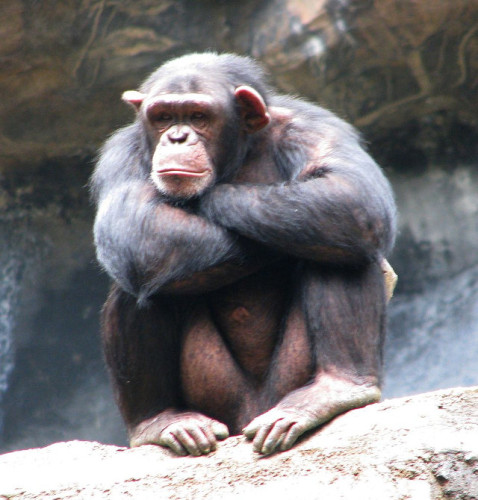
Common chimpanzee

An article published in the journal “Royal Society Open Science” describes a research that documented the use of alcohol by wild chimpanzees. This study focused on a population of chimpanzees living in Bossou, Guinea, West Africa who voluntarily drink a kind of palm wine. They use leaves to collect the fermenting tree juice.

Various forms of plankton (Image courtesy Christian Sardet/CNRS/Tara Expeditions)

Five studies that were just published in the journal “Science” describe some results obtained by the international consortium Tara Oceans in an expedition accomplished between 2009 and 2013 around the oceans. A group of more than 200 people traveled on the 36-meter schooner Tara to collect more than 35,000 samples in the waters of the Earth’s seas to study even at the genetic level the presence of various types of plankton.

Hydrothermal vents at Loki's Castle where Lokiarchaeota were found (Photo courtesy R.B. Pedersen, Centre for Geobiology (University of Bergen, Norway). All rights reserved)

In an article published in the journal “Nature”, an international team of researchers described the discovery of new microbes that constitute a missing link in the evolution of complex cells, those of eukaryotes. They were called Lokiarchaeota because they were found in a hydrothermal vent in the depths of the Atlantic Ocean between Greenland and Norway called Loki’s Castle.

Mammoth skeleton

An international team of scientists has sequenced the almost complete DNA of two Siberian woolly mammoth (Mammuthus primigenius) in a study published in the journal “Current Biology”. This research will help getting more information on the biological history of the mammoths and the conditions that led to the extinction of that species. It could also make it possible to recreate the mammoths in an unprecedented bioengineering operation.

European Grey Wolf

An article published in the journal “Proceedings of the Royal Society B” describes a search that turns upside down the cliché about wolves (photo ©Katerina Hlavata) are aggressive while dogs are tolerant. Friederike Range, Caroline Ritter and Zsófia Virányi of the Messerli Research Institute of the University in Vienna, Austria, conducted tests on mongrel dogs and wolves raising them in the same conditions. The conclusion is that dogs have a steeper hierarchy and are less tolerant than wolves to their conspecifics.