Evolution

A new, extraordinarily conserved half-billion-year-old fossil deposit, was discovered in China

An article published in the journal “Science” reports the discovery of a fossil deposit dating back to about 518 million years ago in the southern China’s Hubei province. A team of researchers already led the excavation of 4,351 separate fossils representing 101 species of which 53 are new. The characteristics of the deposit are similar to those of the famous Burgess Shale in Canada and the Chengjiang deposit in China, where fossil conservation is of high quality. These organisms of what has been called Qingjiang biota date back to the period known as the Cambrian explosion and will help to better understand that diversification. Allison Daley of the University of Lausanne published in “Science” a second article concerning the work of the researchers in China.

Moros intrepidus was a small tyrannosaur that lived 96 million years ago

An article published in the journal “Communications Biology” reports the identification of a new species of tyrannosauroid, the superfamily of carnivorous dinosaurs the famous T.rex belongs to. A team of researchers examined a very incomplete skeleton dating back to about 96 million years ago and named the species, which lived in today’s Utah, Moros intrepidus. It’s the oldest tyrannosauroid discovered so far in North America and this can help to understand the evolution of these dinosaurs in the larger forms that lived later.

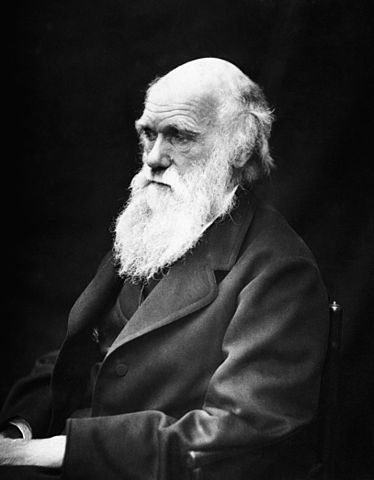
Charles Darwin in 1869

Charles Robert Darwin was born on February 12, 1809 in Shrewsbury, England. In 1831 Charles Darwin received a proposal to participate in an expedition of the ship Beagle as a naturalist. Initially he refused, partly because of his father’s perplexities concerning the long duration of the trip and the lack of retribution but, also due to the intervention of his maternal uncle Josiah, he ended up accepting and on December 27, 1831 he set off on the Beagle for a journey that lasted almost five years.

During the Beagle’s journey, Charles Darwin noticed that on each island of the Galápagos archipelago there were different species of turtles and birds that had various similarities and various specific characteristics. Those were among the key observations for what became the theory of evolution. During those years he also collected other observations not only on flora and fauna but also on the geology of the places he surveyed, which were the basis of various scientific essays that were published in the following years.

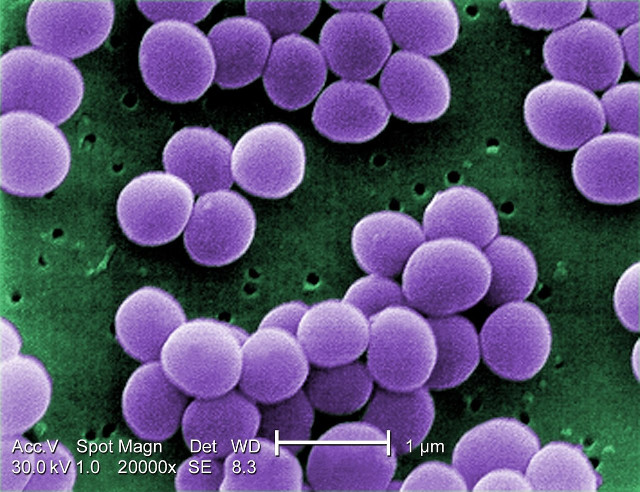
Staphylococcus aureus (Image Centers for Disease Control and Prevention's Public Health Image Library (PHIL))

An article published in the journal “mSystems” describes a research on the adaptations of bacteria of the species Bacillus cereus and Staphylococcus aureus found on the International Space Station. A team of researchers led by Erica Hartmann of Northwestern University compared 189 genomes isolated from various origins to understand the influence of what are called built environments, human products that modify the natural environment. In the Station’s case, it’s an extreme environment and yet no dangerous mutations were detected such as resistance to antibiotics but they developed adaptations to difficult conditions.

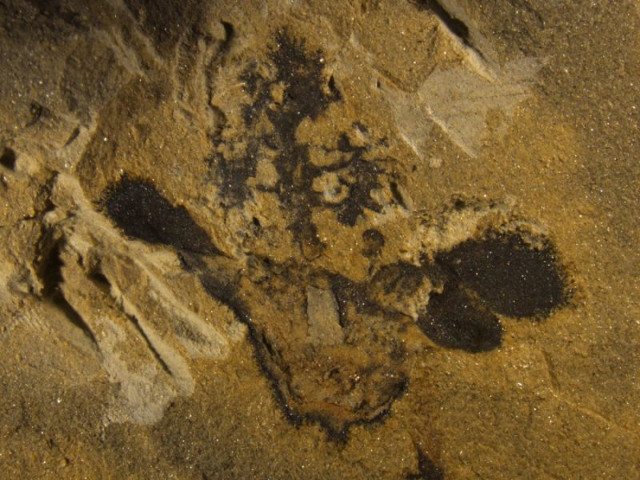
Nanjinganthus dendrostyla fossil (Image courtesy Fu et al.)

An article published in the journal “eLife” shows the discovery of a plant that was named Nanjinganthus dendrostyla dating back to about 174 million years ago, during the Early Jurassic period, which has characteristics typical of angiosperms, which are the plants with flowers. A team of researchers discovered 264 specimens of 198 individual flowers preserved in 34 plates in the South Xiangshan Formation, China. So far, fossil discoveries indicated that flowers appeared 125-130 million years ago.