Evolution

An almost complete skull of Australopithecus anamensis offers new clues to the evolution of hominins

Two articles published in the journal “Nature” report different aspects of a research on a fossil skull of Australopithecus anamensis, the oldest species of its genus and considered the ancestor of Australopithecus afarensis, the species to which the individual nicknamed Lucy belongs. Yohannes Haile-Selassie, Stephanie Melillo and several colleagues in the two teams studied an almost complete fossil skull, which makes it by far the best preserved one among the ones attributed to that species. It offers new information on the history of australopithecines and therefore of the evolution of hominins which led to that of human beings.

The fossil skull of Chilecebus carrascoensis (Photo N. Wong and M. Ellison/© AMNH)

An article published in the journal “Science Advances” reports a study of the known fossil skull of Chilecebus carrascoensis, an extinct monkey that lived about 20 million years ago, in the Miocene period, in today’s Chile. A team of researchers subjected it to a high resolution CT scan to obtain a 3D digital reconstruction that allowed to study its internal structure and therefore the brain’s structure. The new information on this primitive relative of monkeys and hominids that evolved later suggest that the evolution of these primates’ brains was non-linear and that it grew several times independently.

Cambroraster falcatus fossil (Image courtesy Jean-Bernard Caron© Royal Ontario Museum)

An article published in the journal “Proceedings of the Royal Society B: Biological Sciences” reports the discovery of a new species of marine predator that lived in the Cambrian period, just over 500 million years ago, discovered in the famous Burgess Shale. Joe Moysiuk, a graduate student at the University of Toronto, and his supervisor Jean-Bernard Caron named this animal Cambroraster falcatus believing that its carapace had a certain resemblance to the Millennium Falcon.

Komodo dragon (Photo Midori)

An article published in the journal “Nature Ecology & Evolution” reports a complete genome sequencing of the Komodo dragon, the largest lizard existing today. A collaboration between the Gladstone Institutes, the University of California, San Francisco and the Atlanta Zoo that includes researchers from the Universities of Florence and Padua, Italy, led to the sequencing of the DNA of the species classified as Varanus komodoensis using various technologies to obtain a high quality result. This made it possible to compare that genome with that of other reptiles to understand how it has become a lethal predator with unique physiological and metabolic characteristics among reptiles.

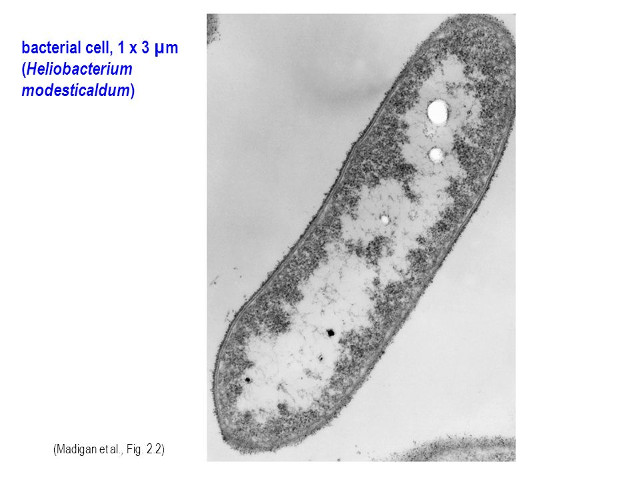
The study of bacteria offers new clues to the evolution of photosynthesis

An article published in the journal “Trends in Plant Science” reports a deveolpment of a theory on the evolution of photosynthesis. Tanai Cardona and A. William Rutherford of Imperial College London studied various bacteria belonging to species capable of photosynthesis. Their conclusion is that the photosynthesis we know today thanks to plants was possible much earlier than previously thought and wasn’t an evolution of another form that is generally considered more primitive and doesn’t lead to the release of oxygen.