
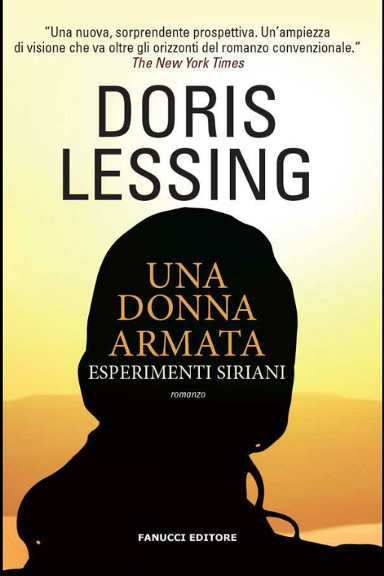
The novel “The Sirian Experiments” by Doris Lessing was published for the first time in 1980. It’s the third novel of the Canopus in Argos series and follows “The Marriages Between Zones Three, Four and Five“.
Ambien II is one of the Five, the small group that runs colonial management on behalf of the Sirius empire. Among her responsibilities, she represents Sirius in colonial operations conducted on Rohanda, as Sirius calls the planet Shikasta. This means working together with the Canopus empire on experiments to be conducted on the planet’s population.
The citizens of the Sirius empire are potentially immortal, and this allows Ambien II to see the effects of the experiments conducted on Rohanda with their long-term consequences. Her awareness of what’s happening develops also in her relationship with Klorathy, a colonial administrator of the Canopus empire.
In “The Marriages Between Zones Three, Four and Five”, Doris Lessing focused on a single story set on Shikasta, a sometimes very transparent allegory of Earth. In “The Sirian Experiments”, the author returns to a broader story about the entire planet in a novel strongly linked to the first one. Technically it’s a standalone novel, but in my opinion, it would be better to read them both, possibly at a short distance from each other. This allows to obtain a more complete view of the history of this planet, also through the differences between the two points of view.
The original novel was told through the eyes of agents of the Canopus empire, “The Sirian Experiments” is instead told by Ambien II of the Sirius empire, hence the subtitle “The Report by Ambien II, of the Five”. The relationship between the two empires is an important element in this novel and sometimes the relationship with Puttiora’s empire, a common enemy of both of them, is also relevant when his agents pursue their interests on Rohanda/Shikasta.
Doris Lessing’s science fiction is strongly humanistic in a very personal interpretation of this genre. In “The Sirian Experiments” we see through the eyes of Ambien II the social effects of the experiments of Sirius and Canopus and of Puttiora’s interference on Rohanda/Shikasta. Over the various eras seen by the protagonist, different populations are manipulated in many ways that lead to changes that can be radical. These populations live in civilizations that are born, evolve, and die for various reasons after passing through different types of government and social systems.
All this offers Ambien II the opportunity to observe the histories of those civilizations and to offer reflections that are also ethical and moral about them and the colonial system. Doris Lessing lived for a long time in the then Rhodesia, now Zimbabwe, when it was a British colony, so that’s a subject the author knew from firsthand experience.
As the ages pass, Ambien II starts having doubts seeing the effects on the populations of Rohanda/Shikasta of the plans that she developed together with her colleagues. For her, this is a personal growth, part of a complex and sophisticated personality. Most of the novel is narrated by Ambien II in the first person in the form of memoirs while the other characters come and go, so she’s the only truly developed character. This is mainly a history of peoples and societies, so that’s not a negative element.
Doris Lessing stated that after writing “Shikasta” she was drawn to the idea of adding more stories to it. “The Marriages Between Zones Three, Four and Five” and “The Sirian Experiments” show how the author used that allegory of the Earth to develop various themes that interested her. The third book is probably interesting especially for the readers who liked the first one.

Permalink