2020

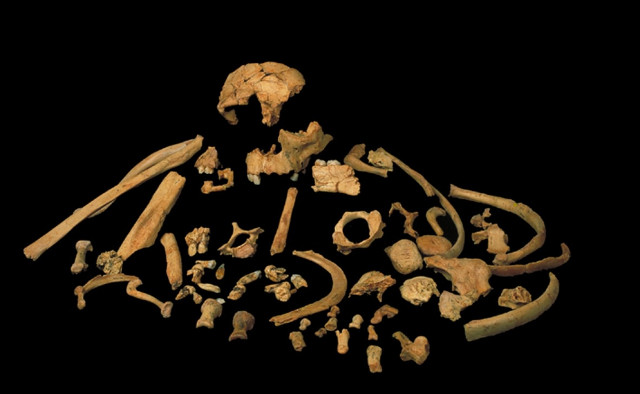
Homo antecessor bones (Image courtesy José María Bermúdez de Castro)

An article published in the journal “Nature” reports a study based on the extraction of proteins from a tooth about 800,000 years old attributed to the species Homo antecessor. A team of researchers used a mass spectrometry technique to obtain that information, very useful for a better understanding of the relationships among the various human species. The conclusion is that Homo antecessor could be closely related to the last common ancestor of Homo sapiens, Neanderthals and Denisovans.

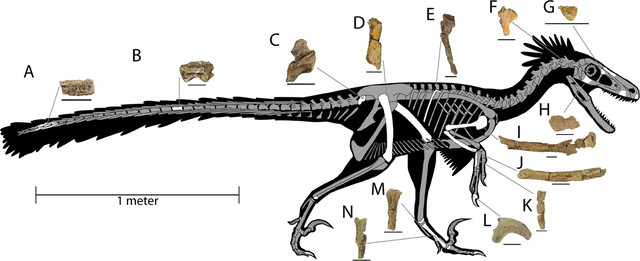
Dineobellator notohesperus skeleton

An article published in the journal “Scientific Reports” describes the identification of a feathered dinosaur that lived about 67 million years ago, in the Cretaceous period, in today’s New Mexico, USA. Steven E. Jasinski, Robert M. Sullivan, and Peter Dodson named it Dineobellator notohesperus after studying the available bones, only a few of them but enough to establish that it was a new genus, albeit closely related to the Velociraptor. These species are cataloged in the Velociraptorinae subfamily and in the Dromeosauridae family, a group of generally small and lightly built dinosaurs, so their remains are rare and any new discoveries help to reconstruct the history of the non-avian dinosaurs that could be the closest relatives of modern birds.

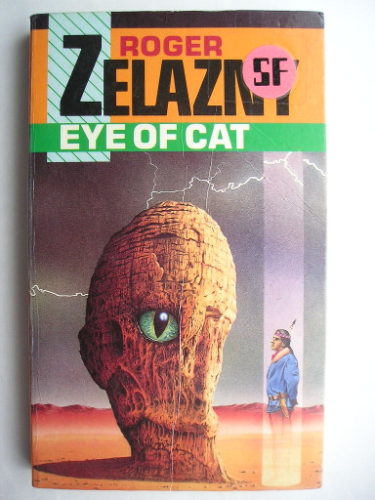
Eye of Cat by Roger Zelazny

The novel “Eye of Cat” by Roger Zelazny was published for the first time in 1982.

Billy Blackhorse Singer is a very special hunter as he hunted alien prey for many years. He has now retired from that activity, but the world government requires his services for a slightly different mission for which his talents can still be very useful: to protect an alien diplomat from a member of his own species.

The mission requires some very special skills and Billy Blackhorse Singer decides to resort to the help of a unique alien, a shapeshifter who’s the last individual of his kind and has various mental and physical abilities. Known as the Cat, the alien agrees to help Billy but in return asks him for the chance to hunt him after the mission ends.

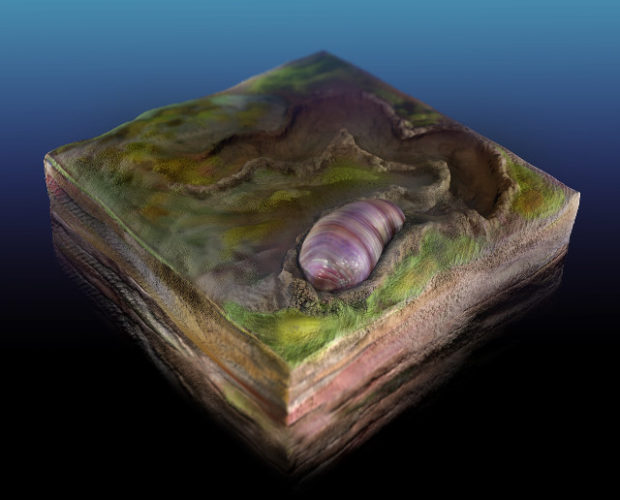
Artist's impression of Ikaria wariootia in a burrow (Image courtesy Sohail Wasif/UCR)

An article published in the journal “Proceedings of the National Academy of Sciences” reports the identification of a worm-like animal that lived around 555 million years ago, in the Ediacaran period, in today’s Australia. A team of researchers led by Scott Evans of the University of California, Riverside, named this tiny creature Ikaria wariootia, identified by the impressions left in the burrows it dug. Its length ranged from 2 to 7 mm for a width between 1 and 2.5 mm, a very small creature which, however, could be a common ancestor to most animals.

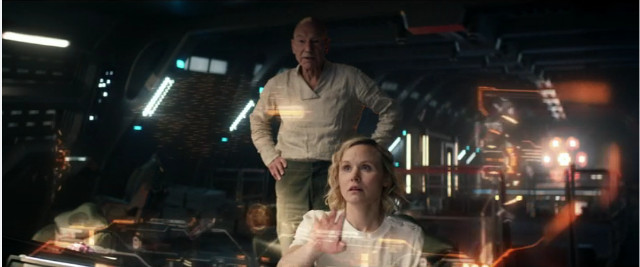
Jean-Luc Picard (Patrick Stewart) and Dr. Agnes Jurati (Alison Pill) in Et in Arcadia Ego, Part 2

“Et in Arcadia Ego, Part 2” is the tenth episode of the TV show “Star Trek: Picard” and follows “Et in Arcadia Ego, Part 1”. It’s the first season finale. It’s available in the USA on the CBS All Access streaming platform and in many other countries on Amazon Prime Video.

Dr. Agnes Jurati (Alison Pill) frees Jean-Luc Picard (Patrick Stewart) but the problem is to convince Soji (Isa Briones) not to contact the synthetic civilization that could exterminate the organics. At the same time, a defense against the incoming Romulan fleet is needed. Dr. Altan Inigo Soong (Brent Spiner) makes a disturbing discovery.